












Most likely, when people talk about classroom engagement, they are referring to the humanities courses like English and history. But why do conversations around engagement rarely touch on the other half of academics: STEM? Engagement in STEM classes has always been undervalued, and it’s time to change that.
STEM teachers must consider adding engagement scores into their curriculum to promote collaborative skills and to increase engagement in post-high school STEM learning.
The first step in determining the benefits of assessing engagement is determining what qualifies as engagement. In an MIT article by Anthony Perry, Assistant Professor at the University of North Dakota, he categorizes STEM engagement in four ways: 1) behavioral, which encompasses participation, effort, and persistence; 2) affective, which encapsulates interest and enjoyment of the content; 3) cognitive, which relates to student focus when studying; and, most importantly, 4) agentic, which details whether students pursue STEM independently from class.
The benefits of student engagement in school include better test scores, retaining information for longer periods, and being more likely to complete work on time. Looking beyond high school, a study published in Research in Social Stratification and Mobility found that high school engagement led to higher wages. Alexander Melonas, Upper School History Teacher, detailed the key role engagement plays within his curriculum: “We want to scaffold the habits and skills where students feel comfortable pursuing interpretations on their own, and in a setting that allows them the opportunity to be tested by other students.” High school builds the skills that students need in their careers, and engagement is the tool to build them.
In his recent presentation to the Upper School, Dino Ambrosi, founder of Project Reboot, pointed out that with the advent of social media and generative artificial intelligence, human-to-human interactions are dwindling. Engagement fills that gap; it teaches students to think deeper, address peers’ arguments that are contrary to theirs, and pushes students to connect with each other for deeper learning. A study published in the Proceedings of the National Academy of Sciences meta-analyzed 225 studies and found that students in traditional lecture-based courses were 1.5 times more likely to fail than students in courses that actively engaged them through discussion and group work.
Specifically, engagement within STEM classes builds collaborative skills. For example, during labs, students must navigate a complicated procedure and construct data tables, all while making sure every lab partner is on the same page. Usually, the best lab groups are those that communicate with each other. Engagement grades would promote sharpening these collaboration skills that students will utilize beyond high school. Building collaborative skills will prepare students for real research outside of the classroom.
Rachel Dunham, K-12 Science Department Chair, refuted the common stereotype of the secluded researcher: “People often think of the brilliant scientist in their white coat alone in their lab in the middle of the night, and that’s not science.” Modern science connects multiple organizations and research institutes; navigating the complex webs of research requires the collaborative skills taught through engagement. Fostering and grading these skills early on helps students see where they can improve and helps them research more efficiently in the long term.
STEM engagement has been historically neglected. Perry noted that failure rates of post-secondary STEM classes are high, and, on average, math classes rank as the least engaging high school subject. This distaste could be for a multitude of reasons; some students think STEM classes do not apply to real-life scenarios, STEM classes are chock-full of lengthy, tedious proofs, or students feel as if they are not thinking critically but instead plugging in equations at seemingly random intervals. Whatever the reason, we cannot afford students to resent STEM classes. Even if students never use a derivative in their future career, these subjects teach students the how to think and work through a problem. Increasing engagement is the best way for students to appreciate and focus during STEM classes. If students come into every class wanting to learn, not only will student proficiency rise, but their agentic engagement will skyrocket.
The first main objection to assessing engagement is that the scores are “subjective.” Students often feel that teachers assign engagement scores based on the whims of their relationship. While these students’ concerns are not unfounded, Poly teachers do not base their assumptions on pure speculation. Dunham remarked, “Most teachers have a good sense of how engaged a student is, especially at a place here where teachers know every student.” Melonas shared a similar sentiment, “If teachers are comfortable asking students to trust teachers as the experts when it comes to grading, I don’t see why the same is not true of engagement.”
Building on this point, Melonas emphasized that subjectivity is not unique to engagement; other grades are subject to the same type of scrutiny, yet engagement is the only grading system shunned. He made the comparison to a thesis statement: “What is the objective line between a B+ thesis statement and a B thesis? You have to trust that I have the legitimacy to make that choice.” If teachers are already expected to accurately grade using their expertise, engagement should be no different.
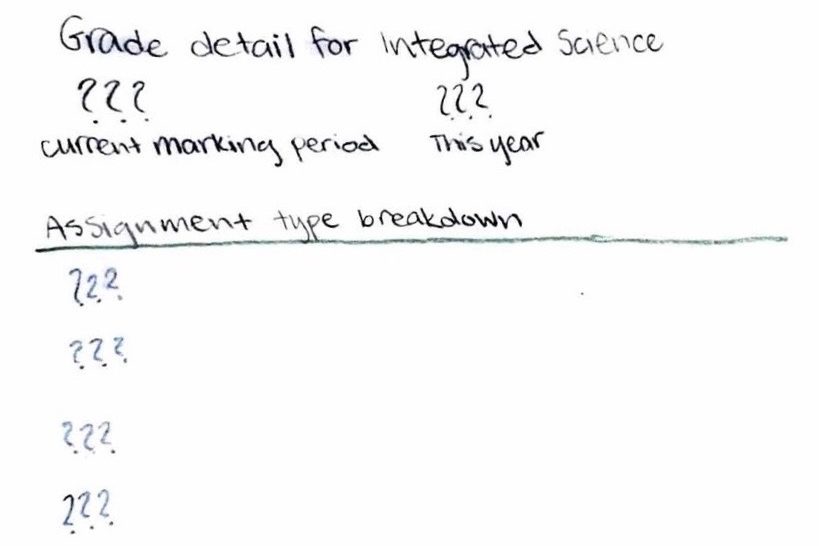
Still, one solution to reducing subjectivity is creating a rubric. Dunham highlighted how the Science Department is experimenting with an engagement rubric that includes teacher input and student self-reflection in 9th grade’s Integrated Science, similar to engagement reflections and assessments in humanities classes.
Another objection to engagement grades is that they unfairly impact shy students. However, public presentation and communicating one’s ideas are crucial life skills to be learned, not skills to be avoided. When I first came to Poly, I was the shy, nervous kid who dreaded public speaking, but through class discussions, presentations, and debate practice, I gradually wore down my anxiety.
Ultimately, high school’s role is to build skills. In an increasingly digital world, students are finding it harder to connect. STEM engagement scores would provide a new frontier for human interaction; they would encourage students’ collaboration skills and exploration of the unknown. Placing a larger value on engagement will improve high schoolers’ appreciation and understanding of scientific and mathematical concepts. For a more connected and innovative future, Poly must foster STEM engagement.