











You sit down to finish your homework, and a text from the person you’re interested in turns into an hour-long conversation. Sometimes that hour is the best part of your day, but when those conversations regularly delay homework, interfere with sleep or leave you distracted in class, it’s worth asking what you’re giving up to keep them going. Dating in high school can teach us how to communicate and set boundaries, but those benefits are often outweighed by the time relationships require and the toll they can take on our academic performance and emotional well-being.
33,168 hours. That’s how much time will have passed between the current freshman class’s first day at Poly on Tuesday, Aug. 25, 2026 and our projected graduation date on Friday, June 7, 2030. While the dates vary by class, sophomores, juniors and seniors can still apply this figure to estimate the length of their own four years at Poly.
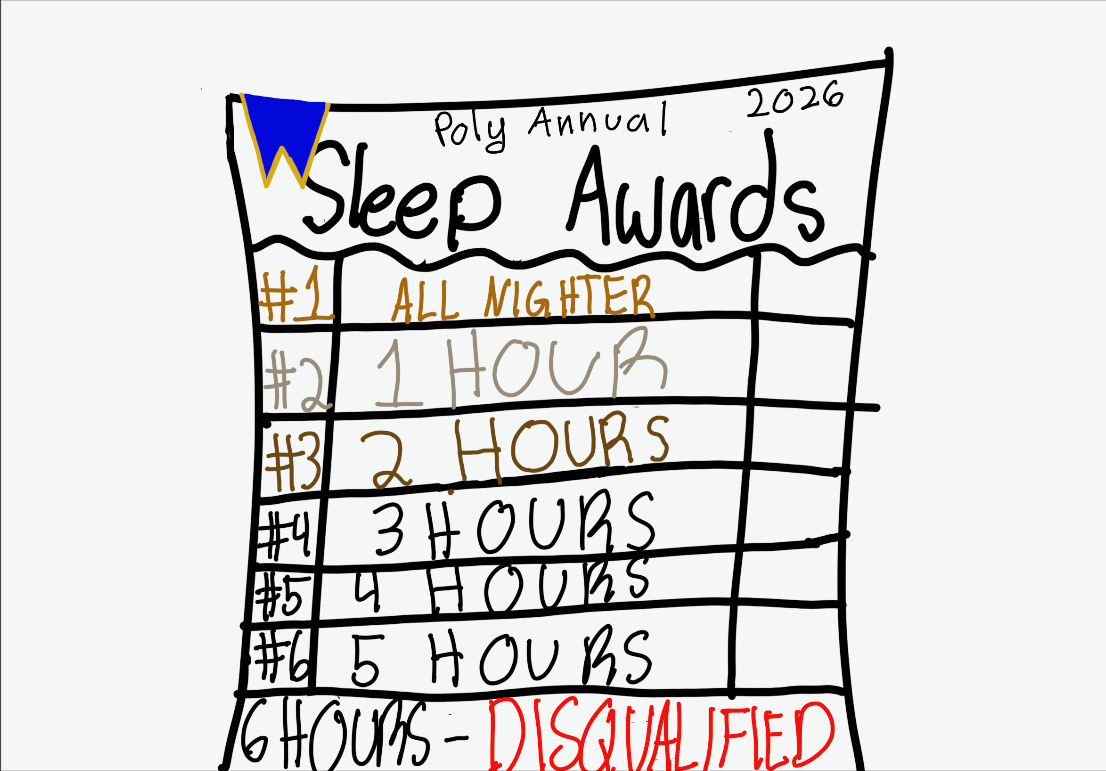
Factoring in the days we typically have off, it’s estimated that we’ll spend 4,508 of those hours at school. A student who attends all four Outdoor Education trips will spend another 480 hours on those. Meeting Poly’s minimum athletics requirement takes an estimated 684 hours of practice, assuming five two-hour practices a week over six seasons. At eight hours a night, sleep accounts for another 11,056 hours. That leaves 16,440 hours for everything else—homework, commuting, meals, family, friends and free time.
Romantic relationships compete for this already limited time. Among the three students we interviewed, a recurring theme was the considerable amount of time devoted to communicating with romantic partners, often around an hour daily.
“I spend about an hour and a half on average,” one freshman said. A senior added, “I would say about an hour a day.” “Once a day I would have a genuine conversation with this person for about 40 minutes,” another freshman shared.
But that’s not it: even before relationships become official, the constant messaging associated with “talking stages” can consume hours that might otherwise be spent productively.
Of course, not every student believes dating compromises academic performance. As freshman Zoe Siemens explained, “If you handle relationships the wrong way, [compromises to academic performance are] very possible and very likely to happen, but I also think if you’re mature about it and learn how to manage your time effectively, that’ll be okay. It really depends on the relationship.”
While maturity certainly matters, maintaining academic focus is not always as straightforward as managing one’s schedule. As Upper School Counselor Andrea Fleetham observed, “It can be really hard, especially if the person you are dating is in school, to maintain focus in class because you’re spending a large portion of your day just thinking about them.”
What’s more, adolescence is a formative period during which teenagers are still developing their identities, emotional resilience and sense of self-worth. For students experiencing romantic attachment and rejection for the first time, a breakup can feel like a judgment of their own worth, making it harder to approach future relationships with confidence.
Yet, despite these potential consequences, many students still assert that high school relationships are worthwhile.
Among the three students interviewed for this article, there was a common consensus that while high school relationships are time-consuming, they provide invaluable experience in communication, emotional maturity and establishing boundaries, and, admittedly, they can.
However, when asked further about the interpersonal skills that dating supposedly cultivates, none of the three students identified a single skill exclusive to romantic relationships. Friendships also teach communication. Friendships also foster emotional maturity. Friendships also cultivate empathy, conflict resolution and mutual respect. So what makes friendships any less valuable? The answer: nothing at all.
Two of the three students challenged this argument. As one freshman put it, “What distinguishes romantic relationships from friendships is, in fact, the romantic aspect itself.” But that distinction does little to address the question at hand: whether the additional emotional commitment and time required by romantic relationships are worth their potential consequences. After all, close friendships can be just as emotionally meaningful as romantic relationships.
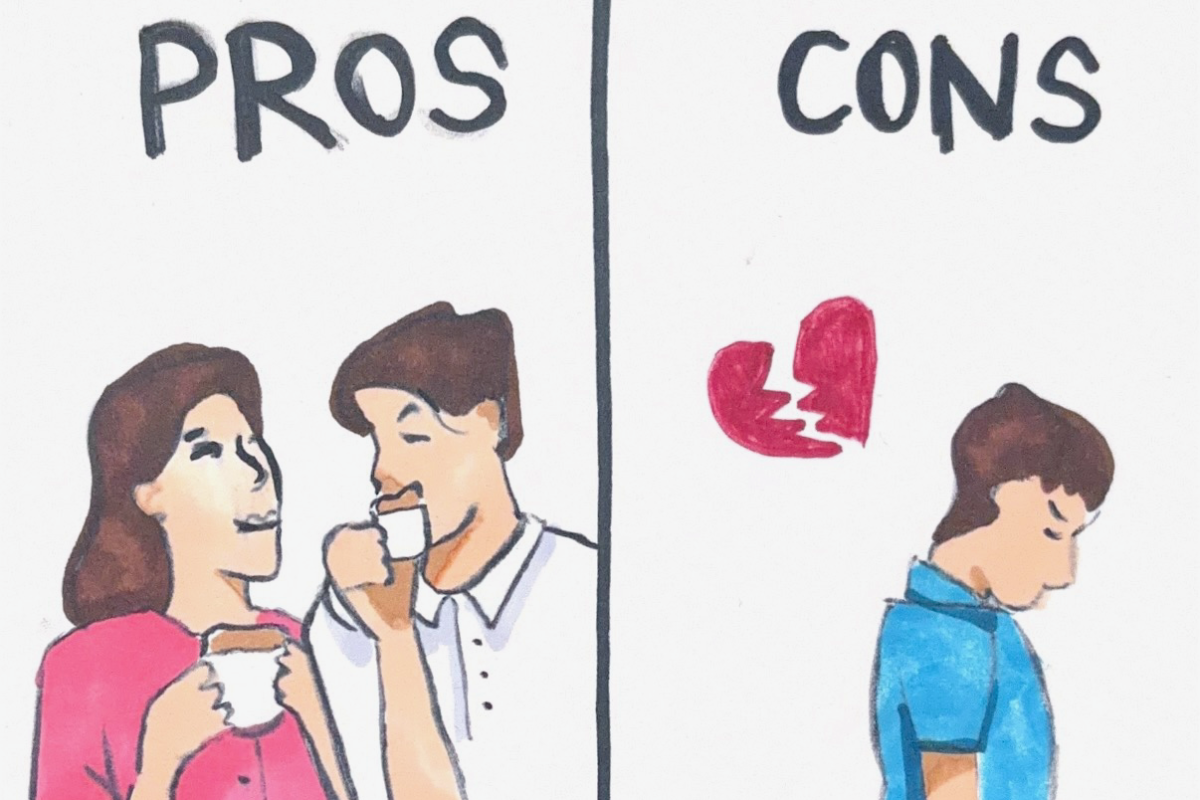
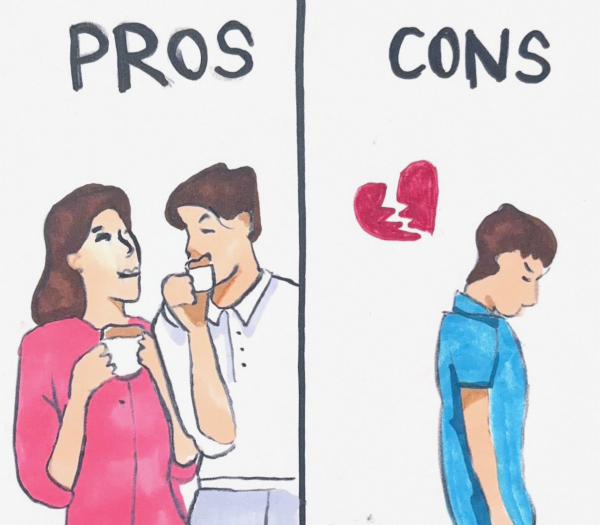
Now while the appeal of a romantic relationship in high school is understandable, for most, it demands a price that most students should seriously consider. When weighed against the potential for lower grades and lasting emotional distress, the benefits of dating such as learning to communicate openly, set boundaries and work through disagreements fall short, especially when these supposed benefits aren’t even exclusive to dating at all.
Whether or not to pursue a romantic relationship is an individual decision, but before making that commitment, high schoolers should consider whether their time and emotional energy might be better invested elsewhere.
After all, the most valuable investment a teenager can make is in themselves.