









What is the point of our education?
It goes without saying that Poly is a rigorous and competitive school where students constantly study and are determined to excel in the classroom. Getting good grades is deeply important to the identity of the average Poly student, often exacerbated by parental expectations and the importance of attending a top college. However, students are often less willing to participate in the classroom or contribute to discussions since participation does not impact grades as significantly as tests or quizzes. The social pressure to avoid being perceived as “trying too hard” further dissuades students from participating in class. While I understand why students prioritize doing well on tests, I believe we should normalize genuine interest in academics by encouraging class participation.
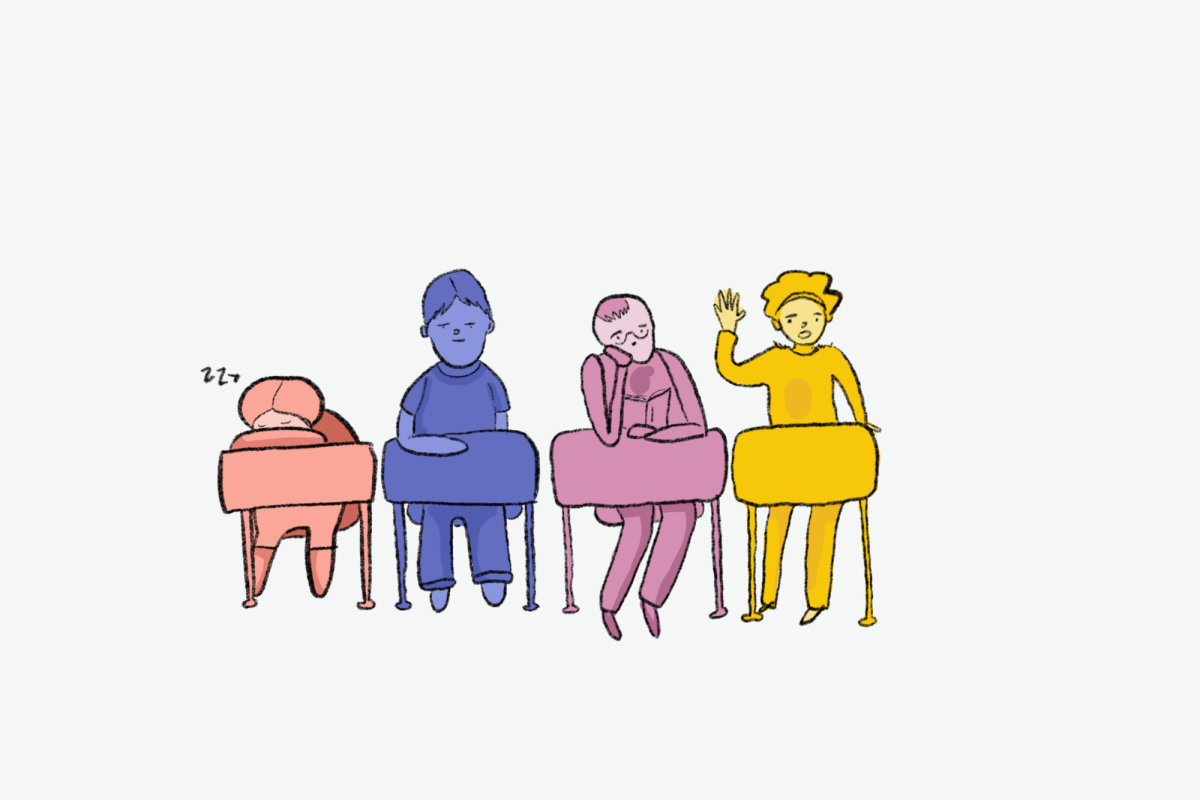
Throughout my years at Poly, I have been in multiple classes where three or four people constantly raise their hands, while the rest of the class zones out. I am guilty of being in the latter group myself; sometimes, I am less engaged in class discussions, especially when it feels like the majority of the class is inattentive.
To combat this, in some classes, participation counts for a grade. “I’ve definitely had plenty of students who are great speakers, and are very comfortable speaking. And maybe aren’t so good at writing. And I also have kids that all their lives have focused on writing and are very uncomfortable speaking. They are rewarded for one skill, but never forced to do the other one,” said Upper School English Teacher Laura Marion in explaining why she grades class participation.
However, participation does not have the same weight as assessments, and in some classes, participation does not count for a grade at all. “Personally, I do not penalize students for not being more verbal, more vocal in discussions,” said Upper School English Teacher Alexander Jimenez. “I prefer to invite them into discussion instead of pressuring them to participate. However, I’m wondering if maybe I am doing my students a disservice by not incentivizing participation.”
While I believe that participation should be a portion of a course’s grade, this alone is not the solution. Students should be interested in contributing to class discussions voluntarily, and our school must foster a culture that promotes curiosity.
Societal expectations can discourage classroom participation in an environment where being nonchalant is key. This appeal stems from social media culture, where it is considered “cringey” to show that you care about something. At Poly, acting nonchalant often equates to being popular. Therefore, if only a small minority of the class is participating, volunteering to join in on a discussion can be uncomfortable. Moreover, conveying interest in improving as a student can feel embarrassing.
“I think if everyone spoke a little bit, then people would feel more comfortable having their own opinions,” sophomore Harper Cook said. “If I was constantly raising my hand, I’d feel a little bit like people thought I was a ‘know-it-all.’”
The current social norms harm the students who choose not to participate, creating a domino effect by sending a message to peers that they should also keep quiet.
“I think students police each other, and I think they police the ways in which they participate, and the expectation is that people aren’t showing too much enthusiasm, too much interest,” Jimenez shared.
This is especially true in classes like English where discussions about themes like identity can often feel personal. But Upper School Math Teacher Rafael Contreras added that this vulnerability extends to STEM subjects where students must be comfortable with the possibility of failure.
“You have to be willing to be vulnerable, being in front of your peers, in a group, failing at something. So I think participation doesn’t mean really just raising your hand and saying something,” Contreras said.
When everyone in a class is comfortable with making mistakes collectively, failure feels less intimidating.
Meanwhile, students can end up even less engaged during electives and art classes that are taken to fulfill requirements or considered an “easy A.”
“I think there’s definitely a tendency in which what we call the core curriculum has more sway in the minds of students, because of the grade culture that we tend to have here,” Upper School Visual Arts Teacher Adam Feldmeth stated. “But [art classes] are no less important or serious… in terms of the learning that occurs. They just propose a different culture of learning.”
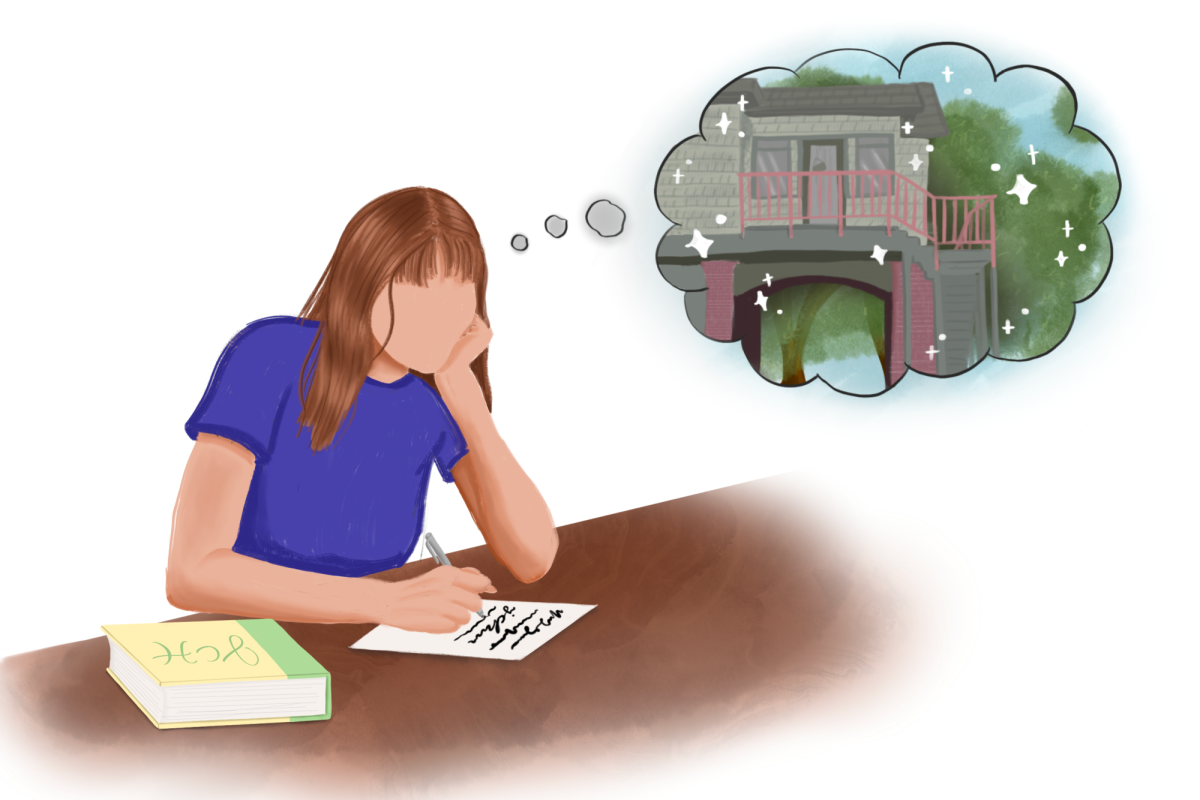
While learning should be embraced for its own inherent value, the reality is that grades often take priority for students. “I do think that the academic pressures at Poly make it so that, ultimately, the grades are the biggest concern,” explained Jimenez.
It is understandable why grades are placed at the forefront of education, but having a strong GPA and being intellectually curious do not have to be mutually exclusive. Displaying effort in the classroom should not be seen as “doing too much,” and instead learning for the sake of learning should be encouraged. This mindset allows for discussions to transform from being surface-level to incredibly thought-provoking. Just as some of my classroom environments have stifled participation, I have also been in many classes where students are eager to join a discussion, which in turn allows me to feel more comfortable participating.
So how can we create changes? Is it a teacher’s responsibility to make discussions engaging enough to promote participation, or a student’s job to take the initiative?
“I want the material to feel engaging. I want students to feel moved to participate because they are enjoying the class,” Jimenez added. “On the other hand, I think students have responsibility, have the agency at the school, to take control of their education, and to put in the effort to engage with the material in interesting ways.”
For teachers, it is important to set up an environment that encourages participation. Rigid lesson plans should not prevent discussions that extend beyond the original plan, and students should have a say in deciding which topics from class readings should receive the most attention. However, I have sat through lectures where a significant portion of class time is spent having students simply restate ideas from readings assigned as homework. Discussions should go beyond these rudimentary questions, and instead allow open-ended analysis and debating. This not only makes the learning more engaging and exciting but also helps develop critical thinking skills necessary for performing well on analytical exams. Similarly, in STEM subjects, classes should not just restate textbook or homework material, but focus on understanding why concepts work the way they do.
Even the simple act of rearranging classroom spaces can facilitate engagement. History and English classes should be arranged in a circle. While some teachers already arrange seating this way, certain history classes have seating by row. Having desks arranged in a circle allows students to have conversations with one another rather than speaking to only the teacher.
Poly should be a school where students are passionate about learning. Ultimately, forcing students to participate in order to get extra points only reinforces the idea that the purpose of school is getting good grades. Because students often have a herd mentality, it will take a collective effort to make this shift. Students must make the effort to share their opinions, even when it feels uncomfortable. Poly offers immense opportunity, but it is up to students to decide what we will make of this experience.