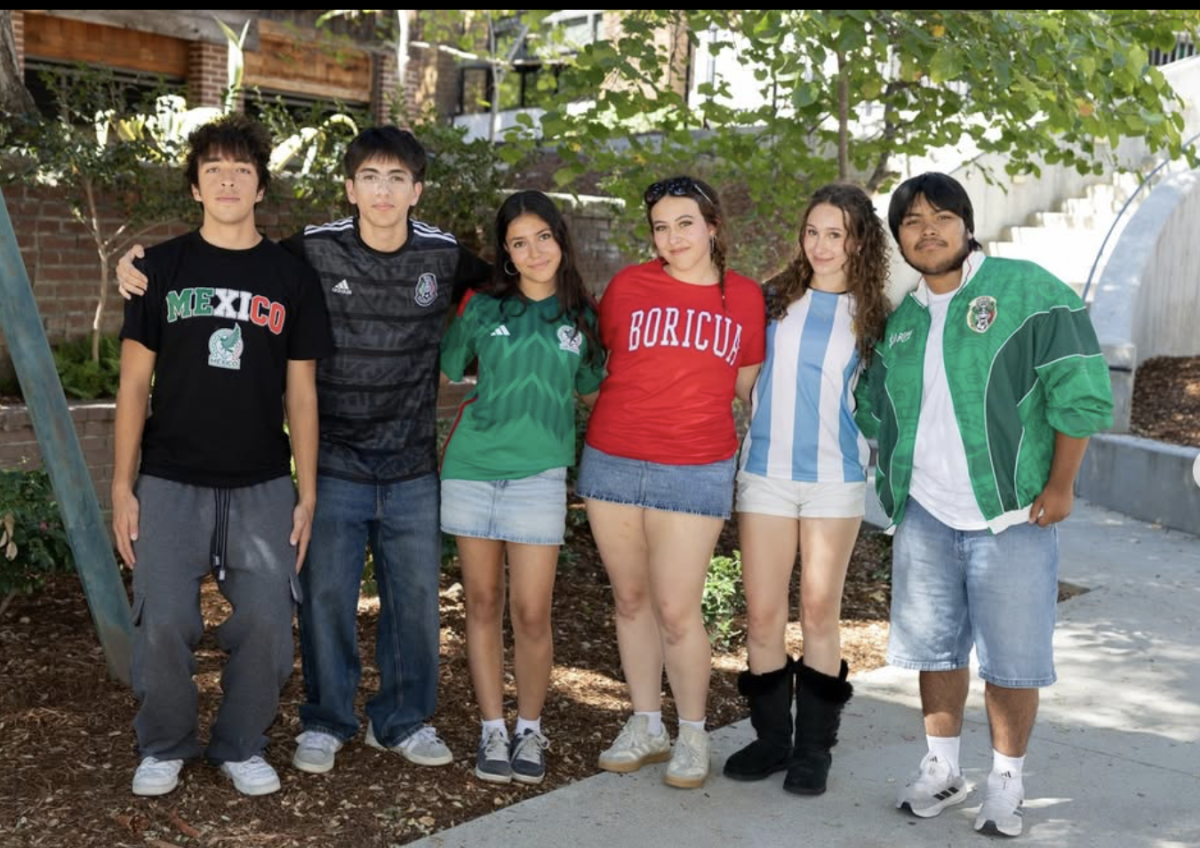



On Thursday, Oct. 8, Upper School students and faculty celebrated Hispanic Heritage Month with an assembly featuring a guest talk from historian and writer Roberta Martinez, live performances of music and poetry, artwork and cultural food booths. The assembly was organized by Latines Unides, the Upper School affinity group advised by English Teacher Alexander Jimenez and Director of Diversity, Equity, and Inclusion Michaela Mares-Tamayo ‘99. Within Latines Unides, there are six student leaders, including juniors Natalia Lakoff, Isabel Perez and Ayende Terrazas, and seniors Uriel Resendiz, Olivia Rivera-Vasquez and Santi Soto.
This year’s assembly centered on the theme of hidden histories, exploring how overlooked or misrepresented aspects of the past continue to shape cultural identity today. Martinez shared personal anecdotes and historical accounts about the experiences of Latin Americans living in the Southwest area, including Pasadena.
“I feel like the assemblies, like the cultural assemblies we do in the Upper School, are really special because they allow students to be exposed to new aspects of their peers’ identities and of broader global cultures that they wouldn’t be otherwise familiar with or that they otherwise wouldn’t be familiar with,” shared junior Natalia Lakoff, a co-leader of Latines Unides.
Including an outside speaker was a new addition to the annual assembly.
“That was an idea that came from one of our student leaders and you know, I always loved to hear or learn from a historian and it was super cool that it came from a student themselves,” shared Mares-Tamayo.
Martinez discussed how historical narratives often obscure the land ownership and experiences of Latines, leaving gaps in the way their histories are comprehended. By sharing the life of Doña Eulalia Pérez de Guillén Mariné, a woman who initially was given 14,000 acres of land until losing it partially due to Mexican property restriction laws against women, Martinez illustrated how these changes can contribute to the erasure of personal and cultural histories.
Martinez also has longstanding connections to Polytechnic School. In addition to being a Poly parent, she previously worked with Upper School English Teacher Greg Luna ‘05, serving as one of his earliest educators during his years in preschool and elementary school.
“Seeing her present at Poly was definitely a flashback to experiencing her in the classroom as a younger student,” reflected Luna. “I would hope that it would encourage a little bit of deeper thinking or reflection on all of our identities and to consider when and why certain aspects of our identities become hidden.”
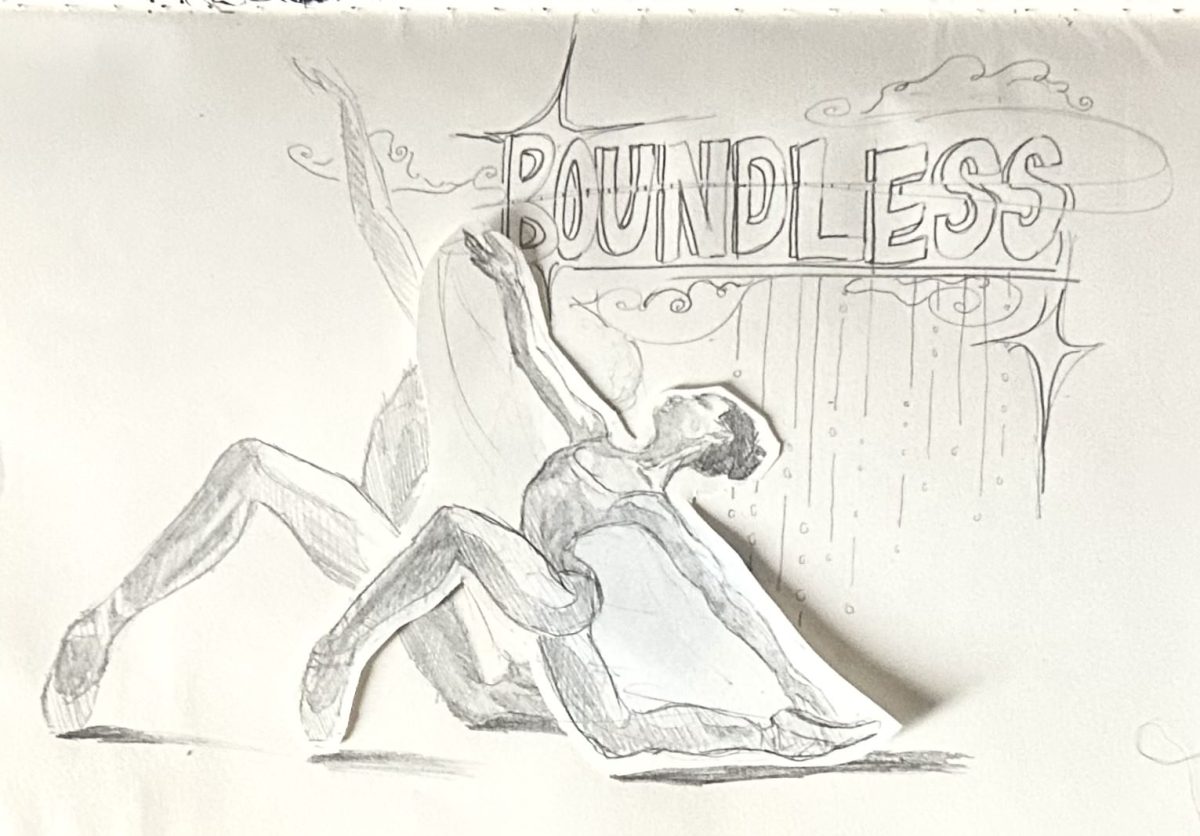
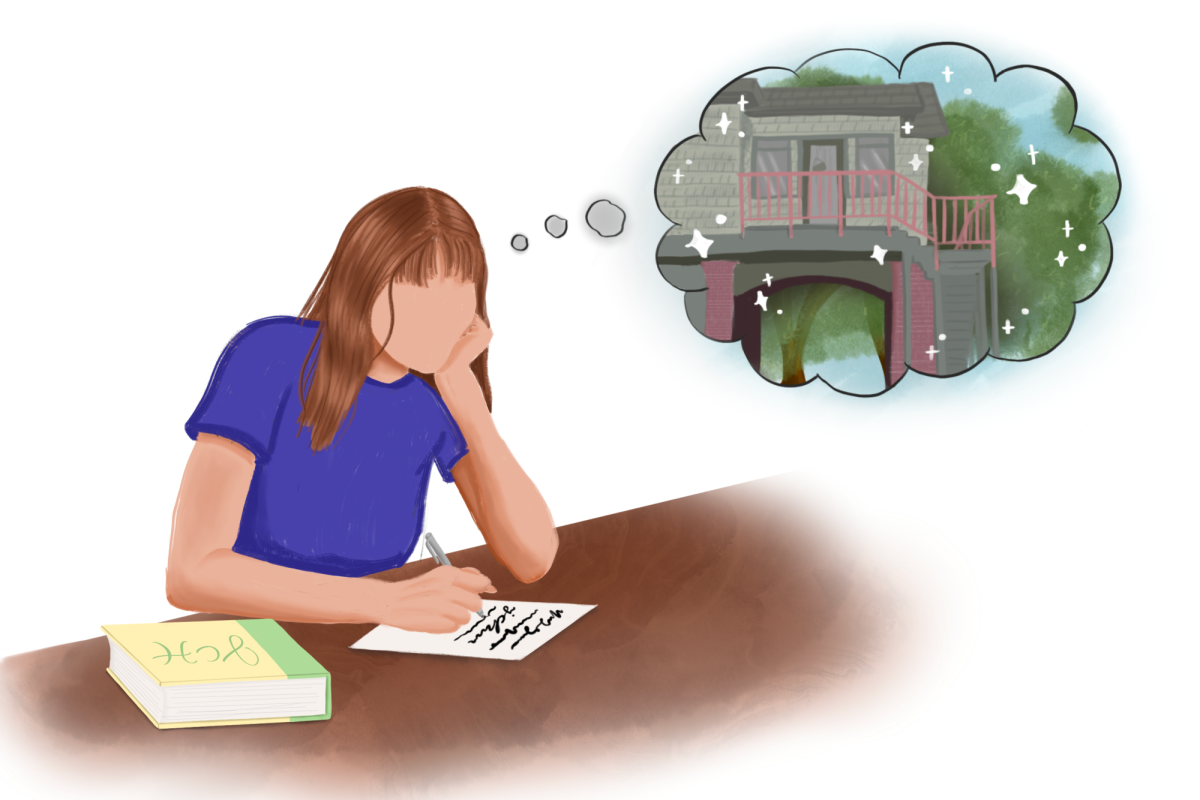
Student performances also played a central role in the assembly. Sophomore Hannah Arrieta shared an original poem dedicated to her father, while seniors Olivia Rivera-Vasquez and Edge Woodruff performed the traditional song “De Colores” by Joan Baez. Junior Isabel Perez also shared her original artwork, showing two pieces that each convey aspects of her cultural identity. Alongside the cultural booths, these contributions offered students opportunities to share personal connections to their heritage and introduce their peers to different cultural traditions.
Organizing the assembly, however, presented logistical challenges. Because the assembly takes place within the first two months of the school year, planning begins immediately when classes start, leaving students and faculty with a limited window to organize the event.
Despite the tight timeline, the assembly offered students the opportunity to connect through shared experiences and historical reflection.
“It was incredible to see all the work involved in the assembly. I loved hearing the speaker and learning about an under-appreciated part of Pasadena’s history,” said senior Madeline Bray.
“I hope they’ll take away an appreciation for just how hard their peers work to create these assemblies and programs and a willingness to listen and learn when their peers speak about things that are important to them and support similar programming from various affinity groups or any of of our communities when we’re trying to share who we are and why it matters to us,” stated Mares-Tamayo.