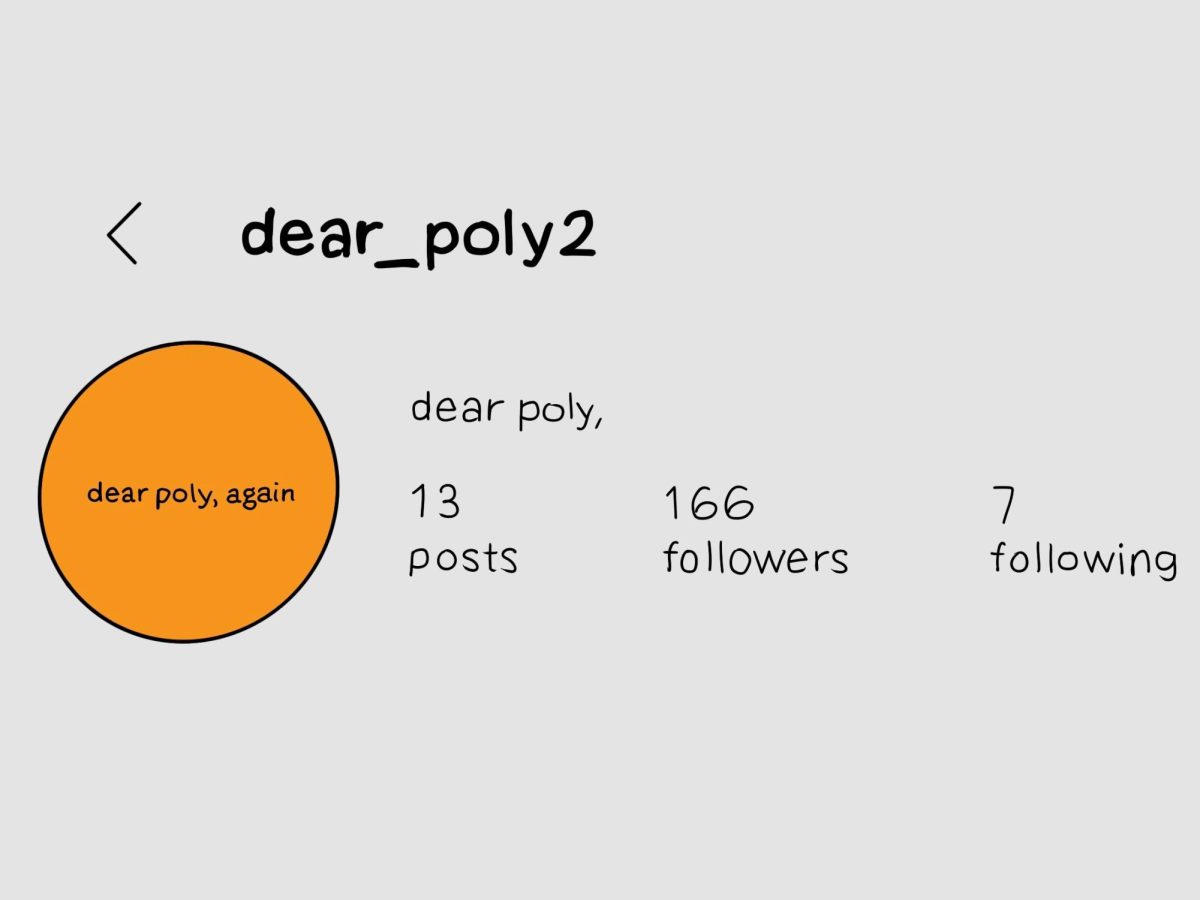





On Friday, Sept. 18, 2026, the Instagram account @dear_poly2 posted for the first time. The post stated, “dear poly, again, the original dear poly instagram account was created as an anonymous platform for POC to share experiences with white supremacy at poly [sic]. The account has been inactive for over 6 years…the purpose of this new account is to continue the work of previous years by collecting and sharing accounts from community members, with the goal of shedding light on the realities and experiences of being a person of color at poly.”
The original @dear_poly account was part of a larger movement of Instagram accounts linked to private college preparatory schools across Los Angeles that began in June 2020, including Dear Flintridge Sacred Heart Academy, Oaks Christian Stories, Black at Harvard-Westlake, and Black at Oakwood School. During this time, the Black Lives Matter movement was resurging, prompted by the deaths of George Floyd and Breonna Taylor. @dear_poly was one of the Instagram accounts linked to an independent school in Los Angeles intended to highlight incidents of racism and bias experienced by students, alumni and faculty at historically predominantly white institutions.
The stories brought to light by these accounts prompted many school communities to acknowledge their shortcomings and take concrete steps towards ensuring an inclusive environment for everyone. At Poly, the 2020 account was addressed with a community letter sent out by Head of School John Bracker, outlining the adoption of new anti-racist strategies, including a new DEI statement, professional development training for faculty and staff and the formation of DEI committees in each division.
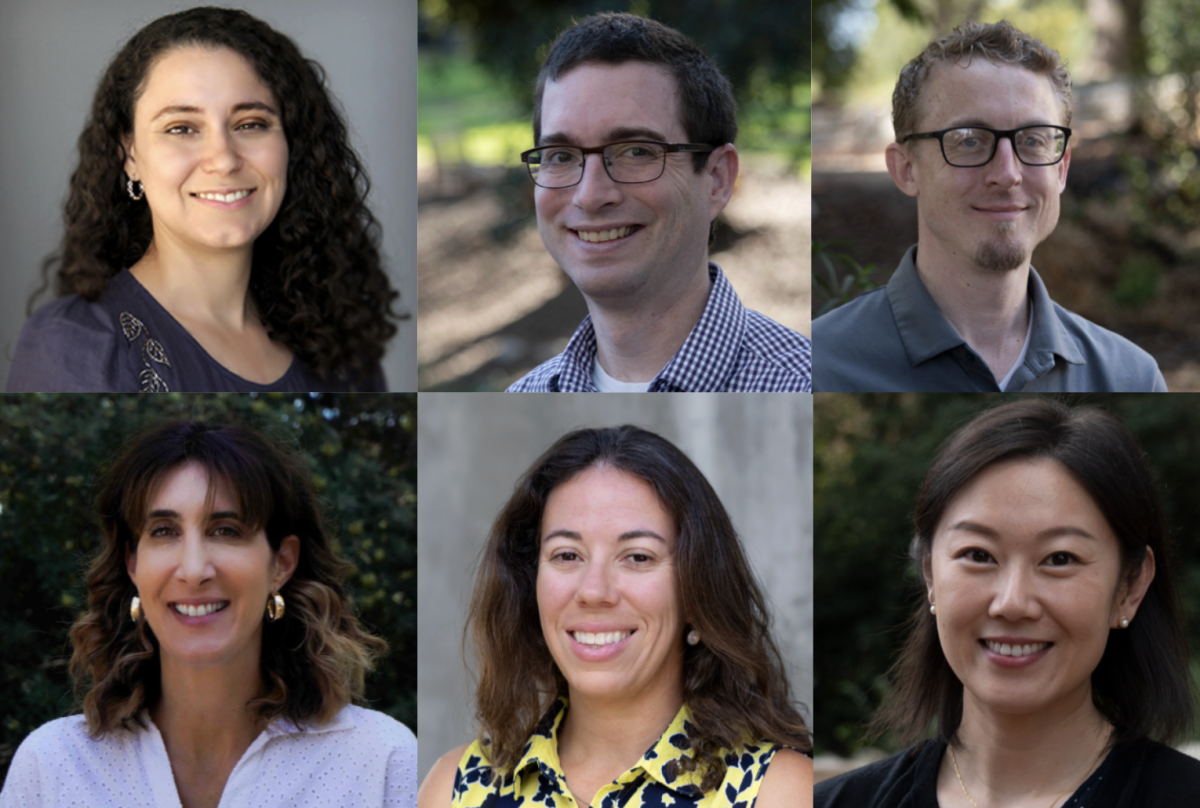
Upper School Director José Melgoza, who was an Upper School history teacher and site director of Partnership for Success! at the time, said, “I think from the original account, it was clear that a lot of students felt that they had reported issues and incidents to faculty, to administration, but had felt that there wasn’t any follow up or wasn’t any action. And so, we got to work to ensure that we did have paths towards ensuring that any information that came to light, especially to a trusted adult, would find its way to administration and ensure action.”
Melgoza added, “We developed our harassment and discrimination policy that was informed by a lot of the information that came to light.”
While the original account emerged among similar ones at other schools, @dear_poly2 is not part of a larger resurgence but rather an independent instance.
Junior Nia Robert, secretary of the student affinity group Black Student Union, commented, “I think the same way the BLM movement against police brutality caused racism to spike, the ICE Raids have similarly shifted the political climate. These past couple of years at Poly, we’ve also had an increase of incidents, so I feel that a space for students to completely anonymously reflect on their experience and express themselves without judgment of being attached to a report or it resurfacing at school is very important.”
In the last two school years, racially derogatory terms were found in a boys’ bathroom and a science classroom. Melgoza, commenting on the new Dear Poly account’s timing, said, “I can understand that something like this would pop up as people continue to experience racism and discrimination, unfortunately, in our society and here at Poly in general.”
To address the first incident, Poly called a school-wide assembly, which included two guest speakers from The Howard Group, an educational consulting group, followed by advisory time, during which students answered written questions reflecting upon the incident.
However, Upper School English Teacher Elsie Dang, who advises the student affinity group Asian American Alliance, pointed out that certain members of the Poly community often respond to these assemblies or DEI efforts with disregard. She said, “We could do better as a community. I think there’s just this sense of very shallow understanding or shallow embracing of the different activities we’re trying to present in order to educate and unite.”
Though the original @dear_poly account prompted discourse and reform, many believe there is still work to be done to reshape Poly’s community norms and ensure a welcoming environment for people of color.
In a series of direct messages, The Paw Print asked the anonymous creator of @dear_poly2 what prompted them to start the account. They stated, “It’s honestly something I’ve been wanting to do for a long time. I was a lifer at Poly, so my time at that school has remained a very important part of my life. Now that I’m away from Poly, I am physically distanced, but a part of me genuinely feels awful for the kids still there. I remember being sick of nothing happening but feeling too hopeless to bring anything up.”
They added, “The Poly bubble is a racist one, and I hope that this account can at the very least let students know that there are other people who have gone through what they might be experiencing and put some pressure on administration to do something.” Examples of stories shared on @dear_poly2 account range from specific incidents of hate speech to broader experiences that reflect biased and exclusionary attitudes held within the community. One post is from an anonymous student in the class of 2029. Part of the post states, “The My 9th grade orientation, a group of lifers talked about how the black people and latinos were just ‘DEI admits’ along with discussing which kids got in because of their money vs. the kids who received financial aid.”
A part of another post, captioned “From a student of color, class of 2026” referred to casual racism as “something we were conditioned to grow accustomed to, to not even bat an eye, and it was tiring as hell.” The post says, “I remember a non-latino student going around the freshman patio, saying ‘beaner’ as loudly as he could, then laughing with his friends. I remember making eye contact with another Latino student who was in the group of friends laughing with the guy. He simply looked away and continued. I know that he was just trying to fit in and learn how things worked at Poly. I honestly don’t blame him, because we all did it.”
Because of the anonymity of the posts and the account’s creator, The Paw Print was unable to verify the information shared. The anonymity also makes it difficult for Poly’s administration to address incidents.
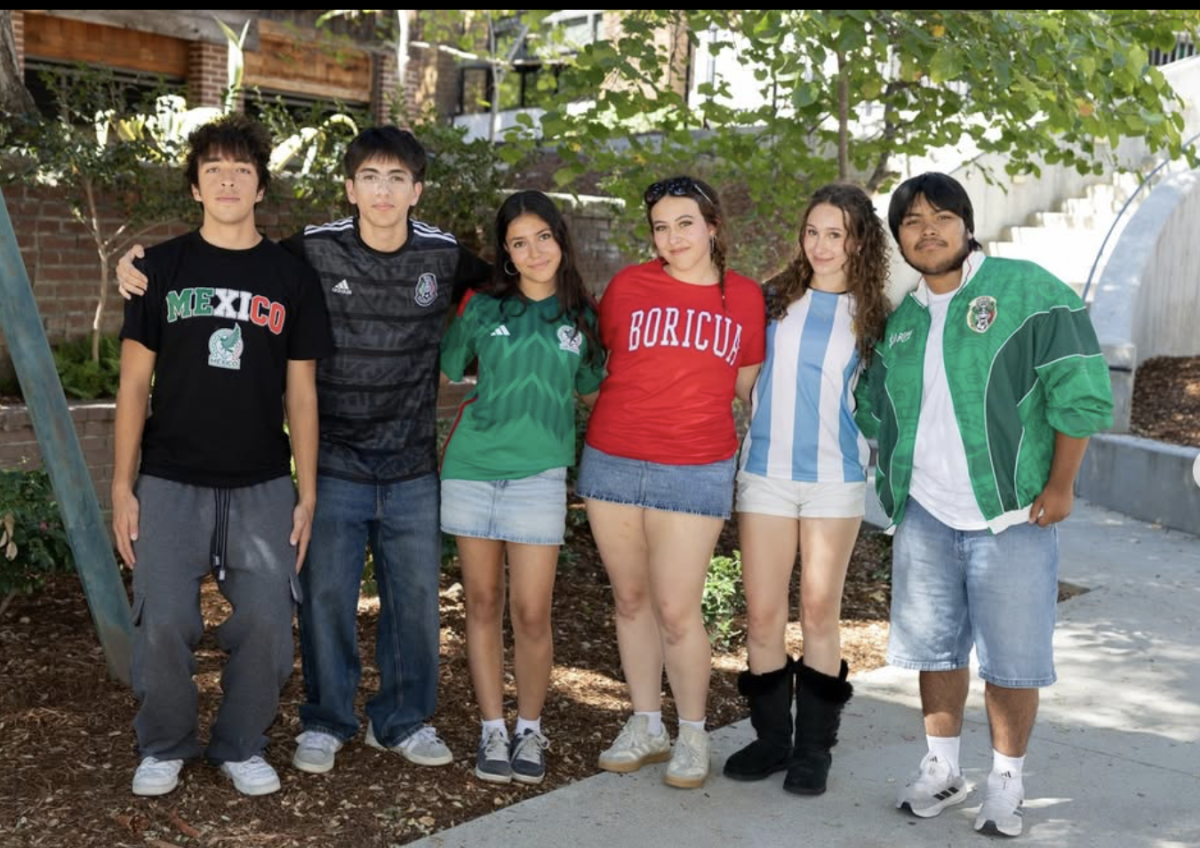
Others, though, think that the account’s anonymity allows students and alumni to share their experiences without fear of retaliation. Senior and president of the student affinity group Latines Unides Uriel Resendiz said, “I was glad to see students taking the initiative to create a space where people could share their experiences and bring attention to issues within our community. Although the account is critical of certain realities of being a Poly student, I think it also serves as an opportunity for our community to reflect on itself. The account allows students to share their experiences, recognize the challenges others face, and find solidarity.”
Robert said, “I feel like it’s very important to call out every incident as it is, despite how micro or macro the aggression is. The Dear Poly page is a way to do that, and I feel that raising awareness can help in creating a shift in conversation.”
Commenting on the creation of @dear_poly2 account, Dang said, “Clearly, students and faculty want administration to do more. It’s not orthodox, but an Instagram account like this that’s a little compilation of all these stories, hopefully it spurs action.”
The @dear_poly2 account creator remarked on some benefits of an anonymous platform, stating “Because this culture is so normalized at Poly, if you act against it, you will be marginalized. The effect of an anonymous platform hopefully forces students and faculty to consider what students of color have faced. Students before me knew that an anonymous platform was necessary to expand who is speaking up without fear of social retaliation.”
However, the account’s anonymity and lack of official affiliation with Polytechnic School creates limitations. Director of Diversity, Equity, and Inclusion Michaela Mares-Tamayo said, “Us as adults, our responsibility is to ensure that we take action when a student shares with us, ‘This was not right, or I did not feel like I was welcomed here.’ I think that a key piece for me is we need to know what those are. People need to tell us directly because we have mechanisms now to be able to follow up, whereas before those did not exist, those were not in place.”
Mares-Tamayo noted that there are reporting systems in place that did not exist when the original @dear_poly account was created. However, she also noted that currently there is not a system for students to report bias incidents anonymously.
The person who created @dear_poly2 frames the account as part of a broader attempt at cultural change. They stated, “I think the very first step is to acknowledge that racism is alive and well at Poly, as I mentioned before. The next steps are up to students and administration still there, but I understand it’s hard to change a system that was built to prioritize white students with POC as an afterthought. I just hope it’s possible.”
Barry Vargo, the Upper School Faculty DEI Committee leader and chair of the K-12 Math Department, said, “The bias incidents that are on @dear_poly aren’t the first time that person has perpetrated bias. They did something smaller. They did something not worth mentioning. And that normalized and grew over time. And that is the student receiving bias not saying something. That’s the peers not saying something. It’s everybody that has ever heard something of bias not saying ‘that doesn’t have a place here at Poly.’ And that is cultural. That is all of us, collectively, together.”
Poly’s administrators also noted that while administrators can implement new policies or hold assemblies, changing the culture requires work from all members of the community. They posit that when members of the community choose not to speak up against instances of racial bias, even ones framed as “jokes,” they are denying their responsibility to prevent such incidents from occurring.
Melgoza added, “I hope that when people hear these stories, they realize that this is still happening, that if we see something, we have to say something, you have to treat people the way you want to be treated. The most effective change happens when you yourself feel empowered to say something. You don’t think it’s someone else’s job to fix, it’s your job to fix. And I challenge all of our students to feel that way when they hear a story of inequity.”