













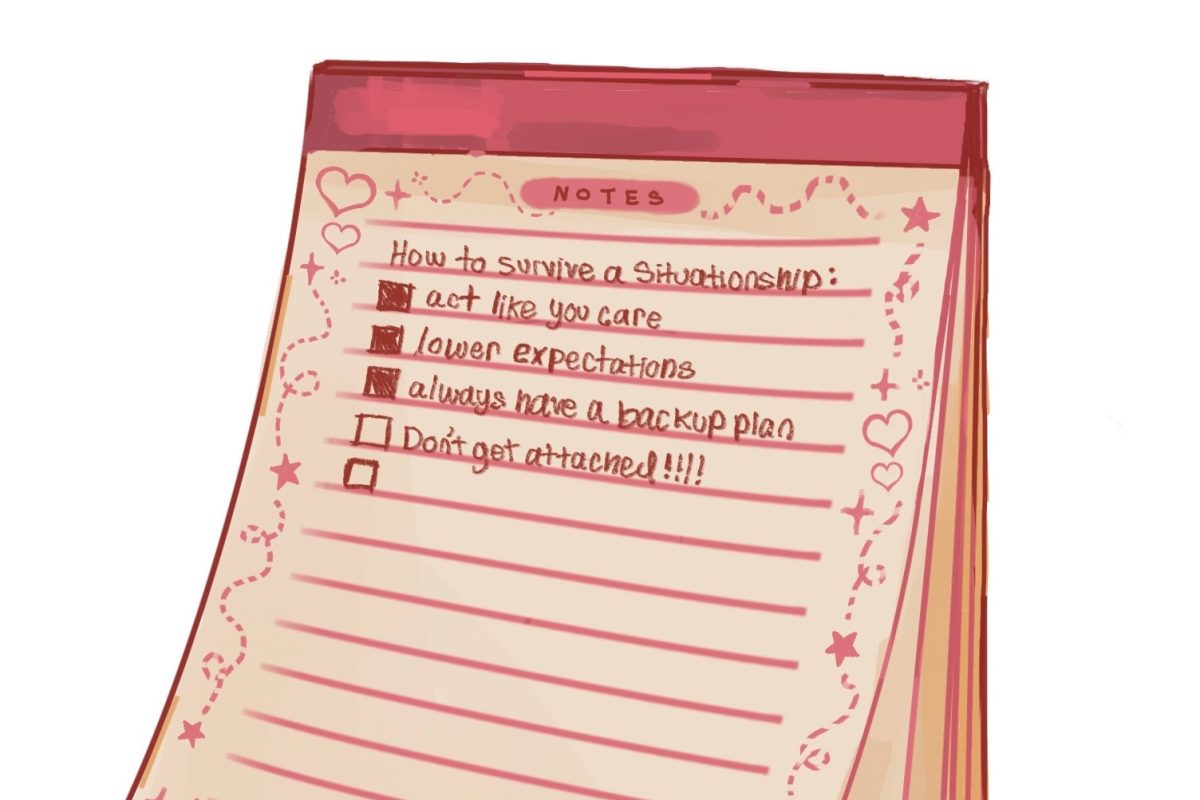
In 2026, the hallways are no longer divided between couples holding hands at center stage and singles sobbing into corners of the internet. Instead, a far more terrifying force reigns supreme: the situationship. The situationship population is thriving, growing and radiating more than anyone in a legitimate relationship. You’ll know a situationship when you see two people sitting just close enough to suggest something, sending Snap streaks that feel more like contractual obligations than friendship, and repeating the sacred mantra, “We’re not something, but we’re not nothing.” In a situationship, nothing is more potent than a ‘k’ text sent at 2 a.m. Ambiguity is chic. After all, commitment just leaves your thumbs worn out from having to reply to “how are you” texts. Welcome to the high school love landscape of 2026, where nothing is official, everything is overthought and confidence with confusion is mandatory.
By a standard mid-morning, the situation-shippers are already hard at work, enforcing the unspoken rules of their ambiguous alliances. Some juniors have begun circulating “Availability Agreements,” meticulously detailing which 37 minutes of the day they are allowed to respond to messages and whether emojis constitute a serious message or just playful banter. Sophomore Ella Winters explained, “It’s all about managing expectations. If I send a heart at 3:12 p.m., that’s technically flirting, but it also leaves room for detachment. It’s a lifestyle.”
Meanwhile, senior Max Yearner has turned his heartbreak into entrepreneurship, offering a workshop titled How to Text Someone You Sort Of Like Without Actually Texting Them. Attendance is high—everyone wants to learn the art of saying nothing while still feeling like something. In 2026, situationships aren’t a phase; they’re an aesthetic and a full-time career path.
Administrators, ever committed to student wellness, have responded to the rise of situationships with decisive action. This semester’s mandatory assembly, “Define the Relationship (If You Dare),” featured a 42-slide presentation explaining the radical concept of clarity. Students listened respectfully, took notes and immediately texted, “Lol that was crazy,” to the person they are definitely not dating. By lunch, the phrase “What are we?” had been added to the school’s list of microaggressions, right between “Did you see my text?” and “So who was that?” Nevertheless, counselors report record-shattering breakthroughs of honesty, with dozens of teens bravely admitting, “We communicate every day, hang out exclusively and meet each other’s parents—but we’re just friends.”
When senior Bob Smith invited Sheila Grath, a girl he had been texting for two months, to winter formal, she was shocked. “Just because I’ve been texting with him for two months and sending hearts and blushing emojis doesn’t mean I’m ready to settle down!” When asked what they thought of Bob’s not-girlfriend’s ideas, many others agreed, stating they would rather text their “not-girl/boyfriends” every day than possibly ruin their “relationships” by putting labels on them.
But Bob wasn’t the only one who didn’t fully understand the “situationship” this winter. Many others were disappointed when they, too, were met with the discomfort of a not-fully-formed relationship that had overtaken their texting lives.
With Valentine’s Day approaching, Bob and the rest of his fellow situationship members started a support group where they talk about their relationships that never really existed. As the meeting ends, they chant: “We’re not something, but we’re not nothing. We’re not something, but we’re not nothing. We’re not something, but we’re not nothing.”
Despite these meetings, the situationship population continues to grow, the number of legitimate couples and definite singles continues to diminish and no chocolate boxes were bought on Valentine’s Day.