






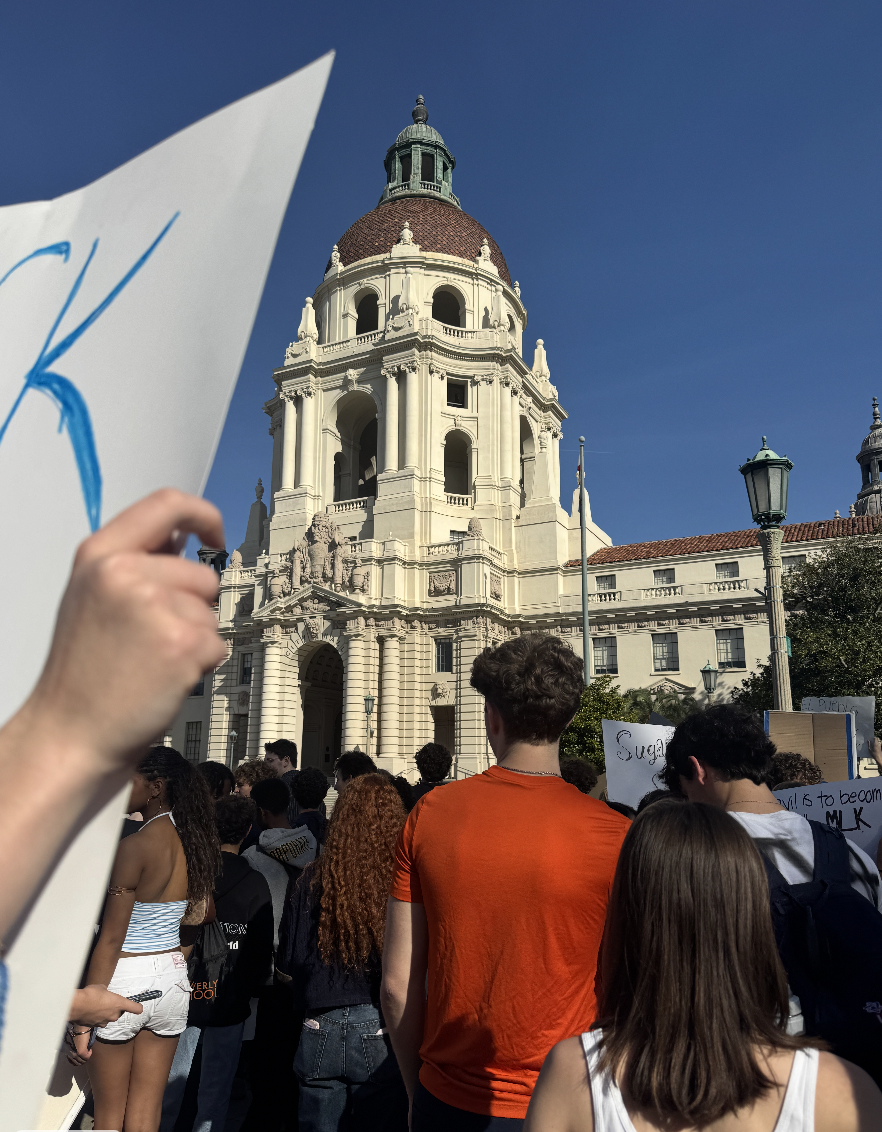
At midday on Friday, Jan. 30, 2026 about 100 Poly students put down their pencils and books in favor of signs and swarmed en masse to Central Park in Pasadena for an anti-U.S. Immigration and Customs Enforcement (ICE) protest.
The walkout, organized by students from The Waverly School, coincided with a national weekend of protest, titled “ICE out of everywhere.” There were more than 300 demonstrations across the country over the course of two days, according to “The Guardian.” The protests came in response to the aggressive deployment of ICE nationally by the Trump administration in the last year, specifically the fatal shootings of Renée Good and Alex Pretti in Minneapolis.
The Pasadena protest was attended by students from Poly, Waverly and Mayfield Senior School. After demonstrating at the corner of Fair Oaks Ave and Del Mar Blvd, students left the park to march around Old Town Pasadena, where protest chants were met with honks of support from passing cars.
The group stopped at Pasadena City Hall, where Poly freshmen Delilah Rich and Talia Dilanchian spoke about the danger that ICE poses to our communities, and later back at Central Park, where Poly freshmen Hannah Arrieta and Rai Gutierrez gave additional speeches.
“We had heard about other schools in the Pasadena district [doing walkouts], and we were like ‘oh, why haven’t we done it?’” explained Waverly senior Avee Garcia, who organized the protest with her classmates senior Haley Safavi and junior Poppy Burrows. They circulated information about the walkout through Instagram and word-of-mouth.
“I’m really really proud of the Poly and Pasadena community for coming out today,” said Poly senior Anastasia Arrieta at the event. “I think that it’s really special when people with as much privilege and education as Poly students come together to protest against such a terrible thing happening in our country.”
“It’s important for [students] to speak their voices,” added Poly junior Anara Williams, “[Because] we don’t have much power because we can’t vote, this is one of the ways that we can make our voices heard.”
“I think it’s extremely important for students to understand the agency that they have,” shared Director of Diversity, Equity, and Inclusion Michaela Mares-Tamayo ‘99. “So many of the biggest movements for social justice, have had youth at the forefront.”
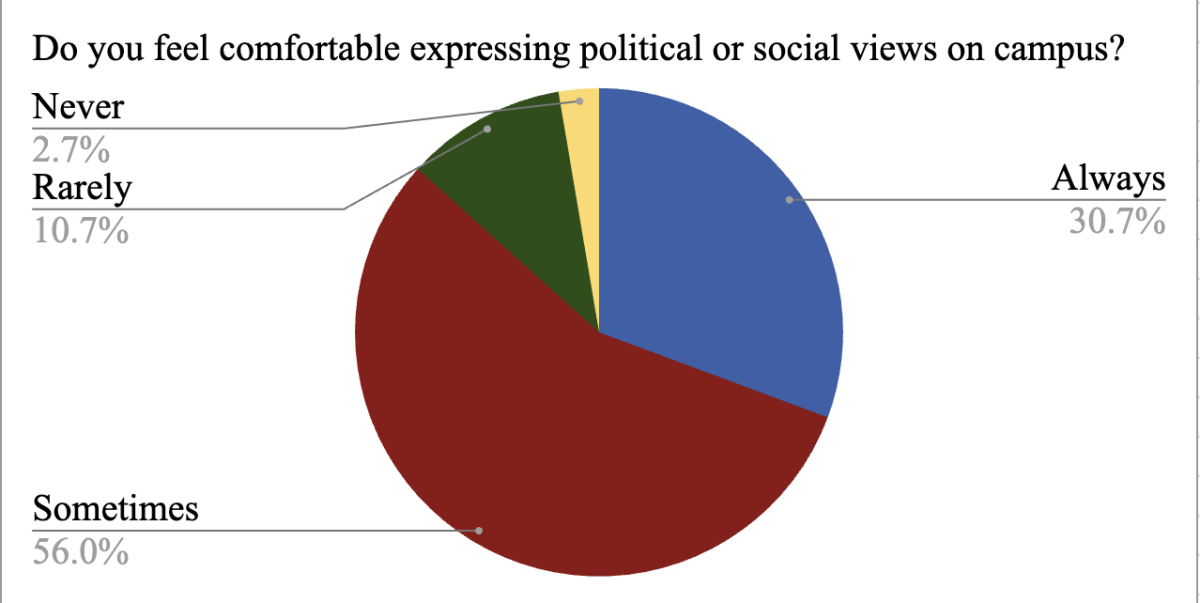
The Paw Print sent out an anonymous survey to students about the walkout and the impact of civic engagement, receiving 75 responses. Of the students who reported not participating in the walkout, 55.6% cited concerns about academic consequences as the primary reason for their lack of participation, while 33.3% didn’t have family/parental permission, 29.6% did not feel informed enough and 18.5% did not believe that the protest would be effective.
“I was confused about how walking out of education and protesting inspires national change,” one student shared anonymously in the survey, “however, violence is not the answer, so I completely support all the people who participated.”
Before the day of the walkout, Upper School Director Jose Melgoza sent out an email to the Upper School.
“We don’t have any sort of official policy [concerning student walkouts],” said Melgoza. “Our responsibility is to educate students on the importance and significance of being a citizen of the United States, and how students exercise their rights is going to be up to them.”
In the week after the protest, the Student Leadership for Inclusion, Diversity, and Equity council distributed “red cards,” also known as “Know Your Rights” cards, with information on how to protect your rights when encountering ICE agents.
On Monday, Feb. 2, Mares-Tamayo addressed the Upper School at morning meeting to reflect on the impact of the walkout. Later that day, Mares-Tamayo led a lunchtime discussion on Arden Lawn for students to discuss their experiences at the walkout and next steps that they might take. Melgoza commented, “The challenge that I give to all of the students who participated: what are you doing now that the walkout is over? How are you continuing to connect and participate in the protest? Change doesn’t happen from just one event, the work needs to continue.”