











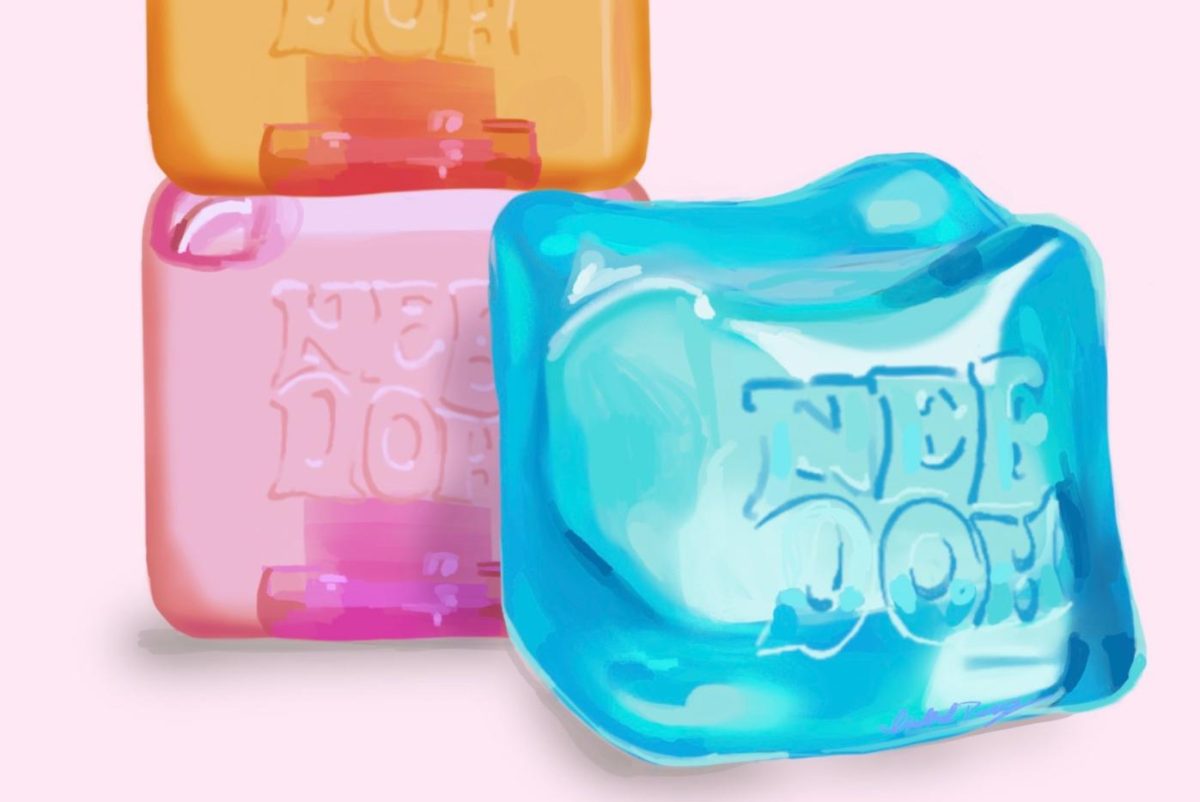
If you look around the halls, classrooms, or lunch tables as of late, you might notice something colorful and squishy in students’ hands. Small, stretchy stress balls known as NeeDohs have seemed to take over as the new fidget mechanism, becoming one of the biggest trends among Poly’s student body.
The NeeDoh is a simple toy: a soft rubber ball filled with a gel-like substance that can be squeezed, stretched and squished in a constant cycle. It’s compact enough to slide right into the front pocket of your backpack, as well as irresistibly satisfying enough to keep students reaching for it time and time again throughout class. While it might seem like just another toy destined to fade into a pile of trends, its popularity within student life has already proven surprisingly lasting, sticking around since November.
Part of the reason for the NeeDoh boom is social media, where TikTok and Instagram videos show people squeezing the toy, stretching it slowly, or even comparing different types of fidgets. The clips often focus on the oddly satisfying way the ball changes shape when compressed, or on the inside goop of the ball, revealed after cutting through the outer layer. The sensation of the NeeDoh is further enhanced by its online representation in giant, color-changing, or extra-soft varieties. After seeing these clips online, students take an interest, with Poly being no exception.
Another reason for the NeeDoh’s popularity is its collectible nature. The toys come in different colors, sizes and textures, which makes them easy to compare or trade with friends. Some students enjoy collecting multiple types and bringing them to school to show classmates. Sophomore Kate Asperger says, “I always have people coming up to me asking for one. People really like them; I’ve inspired a lot of people to get them.”
But the popularity of the NeeDohs is not just about being a trend. Sensory toys like NeeDohs are designed to engage the sense of touch, which can be calming for a lot of people. When students squeeze or stretch the toy, the repetitive motion can help them relax or refocus. While not everyone finds them to be revolutionary, many students say the toy gives them an outlet to regain energy and focus in a classroom setting.
Sophomore Oona Doner noted, “I remember having ADHD as a kid and being super embarrassed at the idea of bringing fidgets into class…It’s been destigmatizing.” The NeeDohs aren’t just another fidget toy; they’re something that breaks down fear of judgment. They also serve as a tool for focus and mental well-being. Freshman Chloe Shyu shared, “I enjoy having Needohs near me because they keep me relaxed and also focused during my classes. Growing up I struggled with staying focused so having NeeDohs has helped me with my mental health.”
Poly teachers have mixed opinions about the trend, often drawing the line between focus and distraction. Some allow small fidget toys in class, recognizing that, in certain situations, they can help students stay attentive. However, they realize that benefits can quickly shift if NeeDohs start circulating around the room.
Upper School Mathematics teacher Manuel Davila says, “If one individual person has it, and they’re just using it as a fidget to make sure they’re focused, then it’s okay. It’s when it’s being passed around or tossed that it’s a problem.”
Of course, trends like this rarely last forever. Poly has seen plenty of similar crazes before—from fidget spinners to slime. Each one seems to take over for a while before slowly fading as something new appears.
For now, though, NeeDohs have steadily made their way into everyday school life. Whether it’s a quick stress reliever before a big test or just something fun to pass around at lunch, the squishy toys have become an oddly memorable part of this school year.