














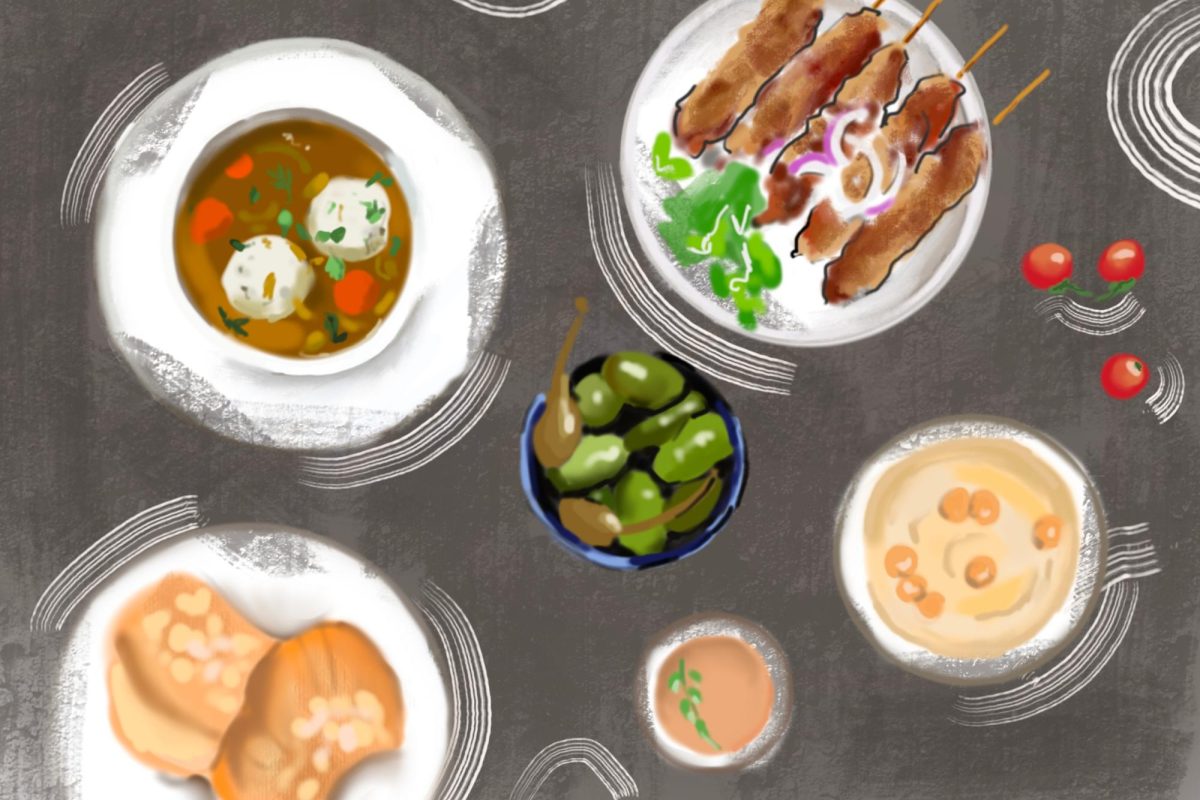
In part one of this series, student contributor Abbey Wong reported that food is one of the strongest ways people connect with their cultures. In my conversations with affinity group leaders at Poly, they shared more about the places, dishes and memories that keep them connected with their family and heritage.
Junior Yash Tandon, a leader of the South Asian Culture Club, said that one of his favorite restaurants is Bhanu Indian Cuisine & Market in San Gabriel, and it’s only about a 10-minute drive from Poly. He highly recommends the butter chicken with garlic naan, the tandoori chicken and the veggie samosas. He said, “The samosas in particular have always been a hit with Poly students at the South Asian Culture Club events.” Tandon also suggests checking out the grocery store attached to the restaurant for those who are interested in cooking their own Indian food at home.
Additionally, Tandon recommends Udupi Palace in Artesia, an LA neighborhood known as “Little India” because of its multitude of Indian restaurants. Udupi Palace specializes in dishes from South India. “My favorite dish is the Masala Dosa, which is comparable to a lentil-based crepe stuffed with veggies and potatoes served with coconut chutney [dip] on the side,” said Tandon.
Junior Arjun Dhadwal, also a leader of the South Asian Culture Club, recommended Namaste Spiceland on Hill Avenue in Pasadena. He said, “I strongly recommend the paneer, it is quite good. I also think the kulfi and Indian ice cream make for delicious desserts.”
Senior Jad Ammar, a leader of the Muslim Student Alliance, recommended Raffi’s Place in Glendale, which offers a combination of Persian and Middle Eastern cuisine. He commented, “I think Raffi’s is a super good restaurant. Just a great spot. The rice is good.”
One of his favorite Lebanese dishes––unfortunately not found at Raffi’s––is kousa, which is typically made with a spiced meat-and-rice mixture stuffed into squash and often cooked in a garlicky tomato broth. Ammar says, “If you try [kousa], you will never go back.”
Sharing his memories of dining at Raffi’s, Ammar said, “In my culture, being a little kid at the edge of a large table while adults speak a language you don’t understand is a quintessential part of the experience.” He emphasized, “Lebanese food is known for being great, but not enough is said about how great it is to be in those restaurants with family.” Moreover, he noted that restaurants like Raffi’s attract diners from all backgrounds. He said, “No one’s an outsider at a Lebanese table.”
Junior Eden Stern of the Jewish Student Union stated that one of her favorite restaurants is Canter’s Deli, located in the famous Fairfax District of Los Angeles. She said, “Canter’s Deli is open very late, so after all Dodger games, I go with my uncle, we go after at like midnight, and feast.” Her favorite items at Canter’s are latkes and rainbow cookies.
Stern also recommended Belle’s Bagels, a retro Jewish delicatessen located nearby in Highland Park At Belle’s, Stern enjoys the sesame seed bagel with cream cheese and a pickle plate. She said, “I think all this food is very comforting and is good any time of year, any time of day.”
Lastly, senior Iris Grether, a leader of the Mixed-Race Affinity Group, recommended the Kogi BBQ Taco Truck for Korean-Mexican fusion. The company has five trucks that travel through Los Angeles and Orange County. Her favorites at Kogi are the tacos and the kimchi quesadillas, though they’re known for their World-Famous Short Rib Taco. This signature includes double caramelized Korean barbecue short rib, a salsa roja made from Korean and Mexican chilies, cilantro-onion-lime relish, and chili-soy Kogi slaw in crisply griddled corn tortillas.
From both parts of this series, it’s clear that food is more than nutrition. It’s family, memories and identity, all wrapped into one. For Poly students, a meal representative of their culture can be a way to connect with family and remind them of the power of their roots.