


















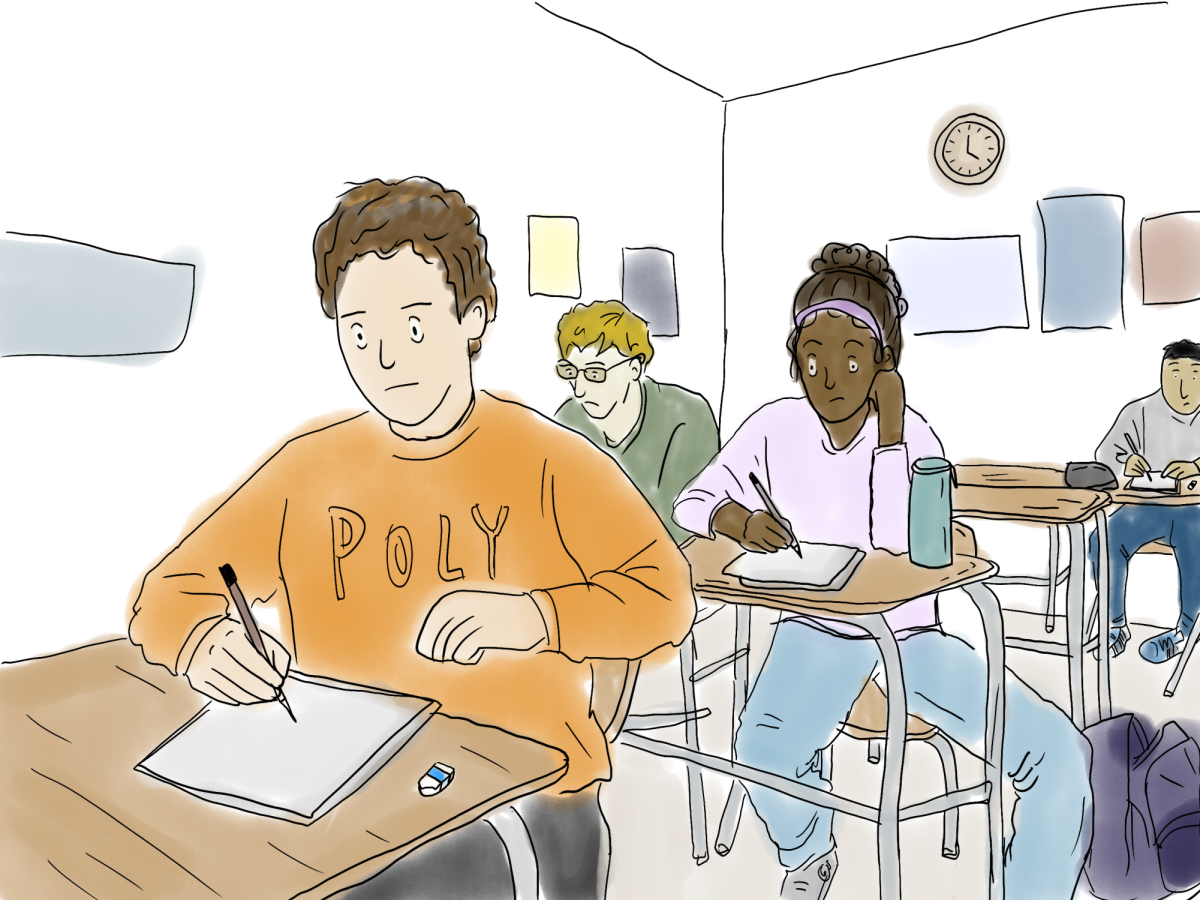
Polytechnic Upper School recently opened the Haaga Testing Center, providing students a dedicated space for make-up and extended-time assessments. Housed in the Haaga A classroom, the Haaga Testing Center opened in the second semester to address scheduling difficulties for both students and teachers.
Upper School Dean of Faculty Harvey Johnson explained that the idea for the Haaga Testing Center emerged after the school adopted the new schedule for the 2025-2026 school year. Previously, the Upper School had two longer 50-minute club periods on Day 4 and Day 6, which teachers often used for make-up assessments. Under the new schedule, those blocks were replaced with shorter 30-minute club periods spread across Day 2, Day 4, Day 5, and Day 6. Because these periods are shorter, teachers lost valuable time that had previously been used for make-up assessments. At the same time, many students and teachers also don’t share free periods, making it harder to arrange these tests.The testing center provides a centralized solution, typically open for three class periods and lunch.
According to Johnson, faculty voiced concerns about the logistical challenges. “Faculty were saying they needed more support with testing,” he explained.
As a result, Poly collaborated with several staff members to develop both a dedicated space and an online scheduling system, making the whole process much easier.
The testing center allows students to complete missed assessments or use their extended testing time accommodations during scheduled blocks throughout the day.
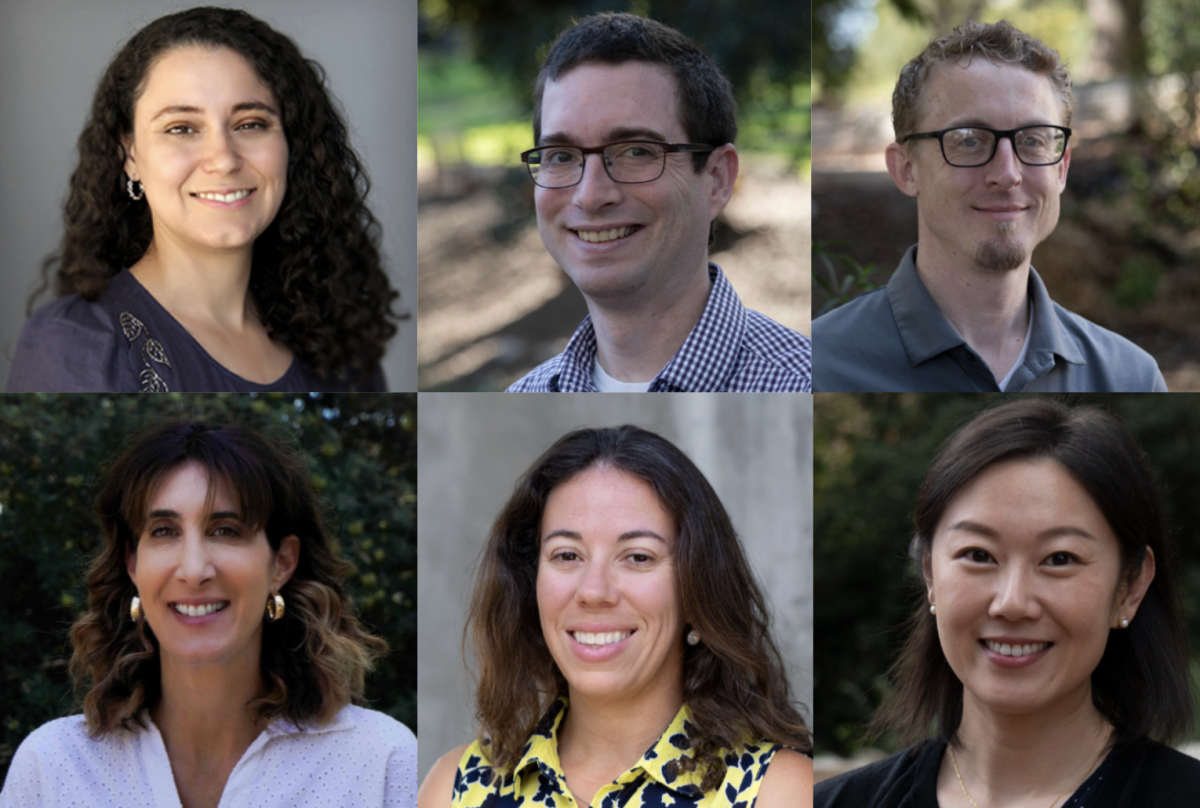
Teachers submit requests through an online scheduling system, and students test in the Haaga A classroom during their assigned time. Students are proctored by a faculty member who is usually not the student’s own teacher. This year’s proctors are faculty members Greg Luna, Samuel Robinson, Justin Riddle and Lauren Homgren, who have reduced course loads.
Proctors manage testing sessions and ensure students follow academic expectations.
Teachers say the system has already made a noticeable difference. Before the center opened, students often had to complete make-up tests and use their allotted extra time before school, during a free period or after school.
“Sometimes a student and I didn’t share a free period,” AP United States History teacher Avi McClelland-Cohen said. “Now they can take the assessment during their free period even if I’m teaching another class.”
“I think the biggest benefit is flexibility,” 10th Grade Dean and proctor Justin Riddle said. “This gives them multiple options for when assessments can happen.”
McClelland-Cohen added, “I’ve used it for at least one student for every assessment I’ve given,” she said.“It was very peaceful and it was a really nice environment where I could write my Shakespeare analysis,” shared senior Warren Peng, who took a make-up writing test for his Pursuit of Happiness class in the testing center.
As the Haaga Testing Center continues to serve students and faculty, the school community looks forward to seeing how this new resource will improve testing experiences and adapt to evolving academic needs.