








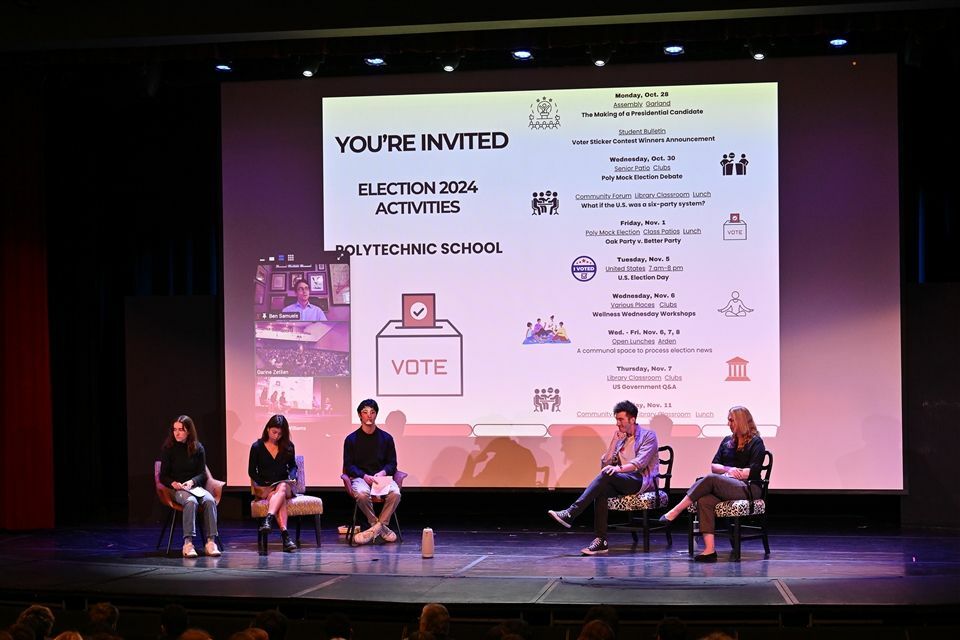





On Saturday, Feb. 21, Poly hosted the third Institute for Global Learning (IGL) Student Climate Action Summit in the Upper School Library, focused on climate solutions and connecting students from Poly, Flintridge Preparatory School, Geffen Academy, Sequoyah School, Westridge School and York School through discussion. IGL is a nonprofit association of K-12 schools committed to global education. The organization’s climate education initiative launched around three years ago, and it aims to teach students the science behind climate change and how to take action on it.
Poly has been an IGL member school since 2014, and the institute selected Poly to host this summit because of its sustainability initiatives, its proximity to many other IGL member schools, and the commitment to climate education exhibited by Poly’s teachers. Manager of Environmental Sustainability Laura Fleming, Upper School History and English Teacher Avi McClelland-Cohen, and Upper School Library Director Nora Murphy planned the event alongside a student leadership committee of eight Poly students, including freshman Ellie Cheung, sophomores Ryan Kim, William Pan, Michelle Xu and Olivia Zee, and juniors Sabreen El-Amin, Audrey Ma, and Alexandra Tan.
IGL Executive Director Clare Sisisky worked with Poly in organizing the summit.
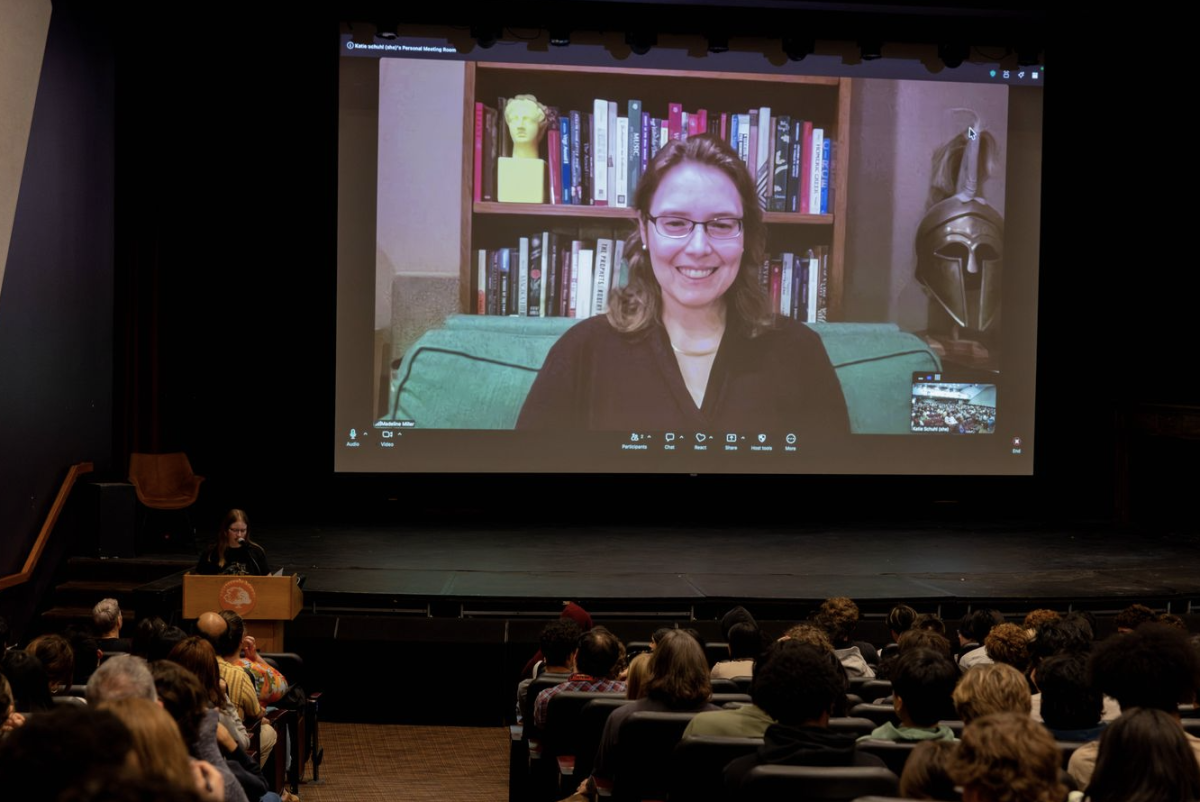
IGL provided Poly student and faculty organizers with a structure for the event. There were two student dialogues, discussions among student participants, facilitated in separate rooms by El-Amin, Kim, Ma, Tan, Xu and Zee. Ma and Pan moderated a panel featuring Wesley Reutimann, co-founder of Active San Gabriel Valley, a nonprofit focused on eco- and pedestrian- friendly transportation; Drew Shula, CEO of Verdical Group, the sustainability consulting firm that worked with Poly to install solar panels on the gym; and Bonnie Wongtrakool, the Global Head of Sustainable Investments for Western Asset Management.
The student and faculty leaders chose the summit’s theme to be “What If We Get It Right?”, drawing from marine biologist Ayana Elizabeth Johnson’s book, What If We Get It Right? Visions of Climate Futures. The theme was also inspired by the adoption of a similar topic for the upcoming LA Climate Week from April 8 to April 15, organized primarily by the nonprofit Collidescope Foundation.
“There’s a lot of doom and gloom about emissions rising and then natural disasters getting worse, things like that. We wanted to have a positive take where students could be more solutions-focused and think about how their communities can actually come together to make that change,’ shared Ma.
Sophomore Sophie Tan, who attended the summit, recalled a student from Flintridge Preparatory School struggling to make progress on climate action at her school because there were so few students who expressed interest.
“Now I’m thinking about climate change more, and I think I’m going to in the future take the climate change course that [Poly has] offered. I really liked hearing people talk about their climate change experiences and what we can do to be more active,” explained Tan.
Fleming emphasized the importance of engagement from students like Tan.
“Student voice really matters. When students speak up, whether it’s [to the] faculty, to the administration, [or] to the board, they listen. It matters and it raises awareness and often leads to action.”
Reflecting on the event, Sisisky noted that there are several barriers to collaborating, including time, distance and resources, even in a region that has felt the serious impact of climate change very recently. It’s another reason why we do it,” she said. “Now all those educators that were there [at the summit] are in touch with each other.”
After the summit, students and faculty are continuing to discuss ways to mitigate climate change and educate about it, including adding more solar panels, offering an AP Environmental Science class and creating a new recycling system on campus.
“Collective action can be an antidote to climate anxiety,” explained Sisiky. “An event like this, even though it’s small, can have a positive effect.”
“What I hope is that relationships are formed and that these kids and these schools will begin to be more of a network [of] people who all care about climate and can work together. Because we don’t need to just be working at our individual campuses. Collective action is what we need,” shared Murphy.