






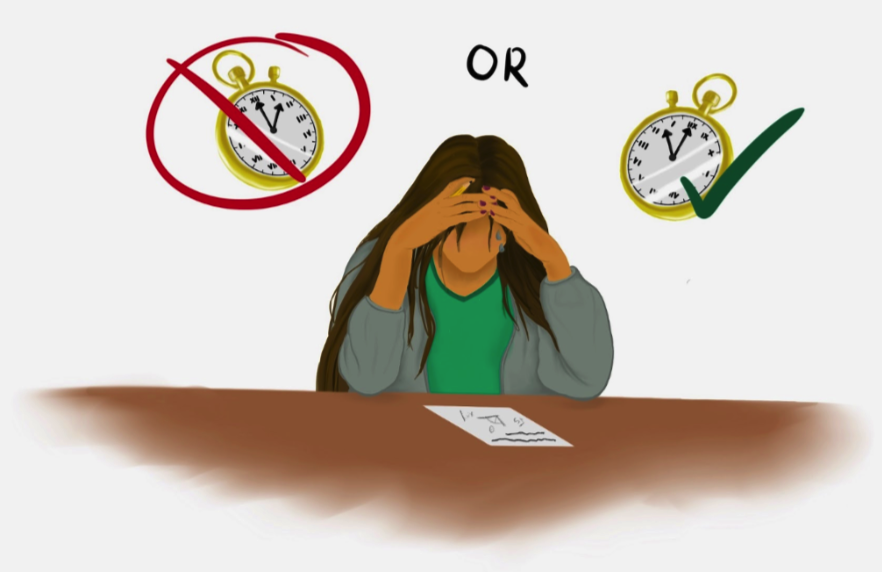









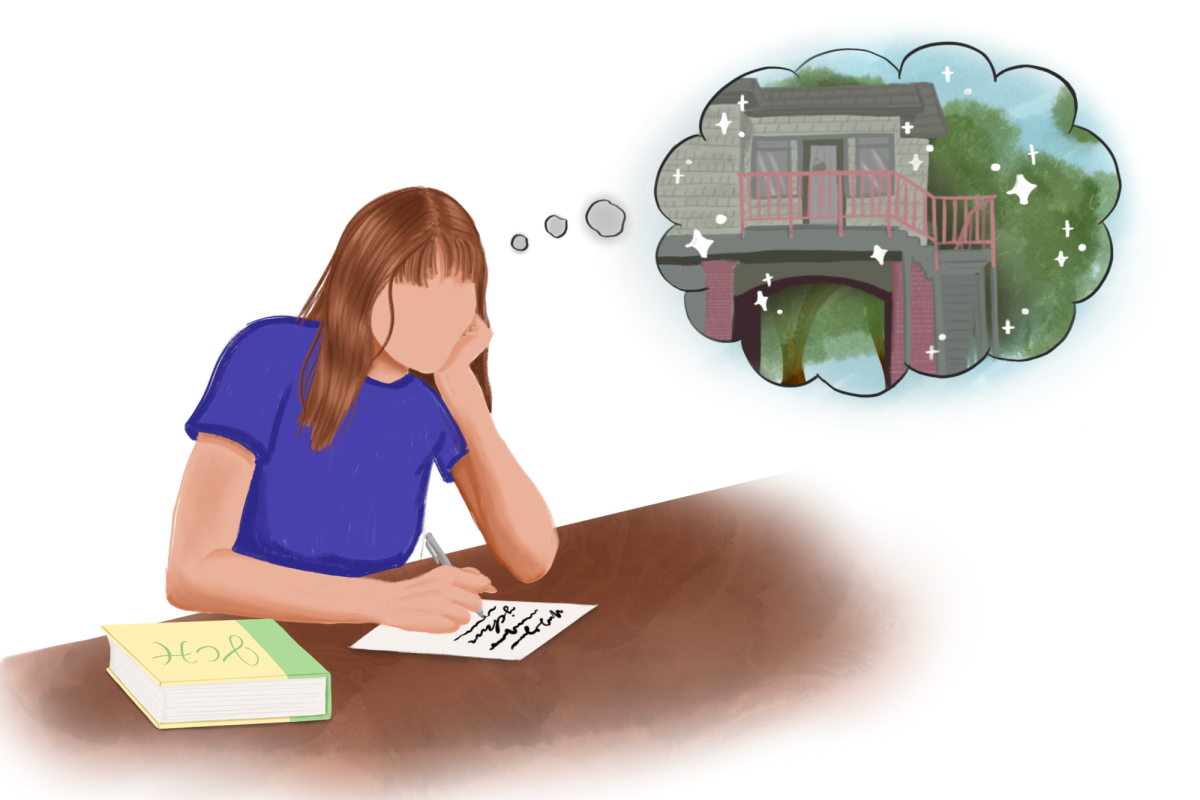

I think I speak for everyone when I say the feeling when you sit down for a test – hand shaking and sweating, brain scattered, clock ticking – is one of the worst feelings. Test anxiety is a force that has sabotaged exams for many students in our school. For some, the nerves eventually disappear. But for many others, anxiety immensely hinders their test-taking abilities. According to a 2020 study published in the National Library of Medicine, approximately 20–40% of students in the United States experience test anxiety at a level that negatively impacts their academic success.
At Poly, where academic rigor and competition are embedded in students’ lives, this problem is amplified. Casey Gmelich, a junior, said, “I think test anxiety is so extreme at Poly that a lot of people convince themselves that they’re sick in order to skip school on test days.”
Conversations about stress and school-related anxiety are prominent amongst students, yet solutions remain limited. Test anxiety is a shared experience that quietly shapes our school culture, affecting motivation, mental health and students’ relationships with learning. Gmelich also shared, “The Poly community should emphasize current resources such as the ‘Student Resources’ page on MyPoly, as many students are unaware that it exists.” That lack of awareness extends to the “Student Resources” Google Drive folder as well, even though it includes homework and planning tools and a social-emotional support guide. This gap in visibility makes it clear that Poly must adopt and implement stronger, school-wide strategies to address test anxiety and better support students’ academic performance and well-being.
Although everyone encounters nerves throughout high school, test anxiety inflicts a unique and often crippling barrier that preparation alone cannot overcome. Upper School Learning Specialist Maya Seneus noted, “Students study really hard, [but when] they sit down for their tests…the mind just goes blank in a pressurized environment.” This mental freeze blocks the knowledge students worked so hard to acquire, and it’s actually directly tied to biology. Anxiety triggers the body’s fight-or-flight response, diverting blood flow from the brain’s frontal lobe – the region essential for reasoning and recall. The result is that students who know the material suddenly can’t access it during this moment of high stress. According to the National Institute of Health, test anxiety not only correlates with lower grades but also with increased risks of depression, low self-esteem and reduced life satisfaction among students, creating a health urgency.
This pattern isn’t unique to Poly, but we feel it with much greater intensity given the competitive academic environment. Seneus, who has worked at three different schools, said, “My previous schools were very different; it seems to impact a lot of kids here and very severely.” As a school, we must reduce the pressurized environment, not to lower standards, but to allow all students to meet them.
Seneus explained, “There’s not one solution, and what works for one kid might not work for another.” However, teachers play a huge role in how students are able to manage their academic and mental needs. Understanding that everyone learns and can showcase their learning in different ways, teachers can use many methods to support students in their education. First off, it’s important to offer a variety of ways in which students can apply their learning. Test-taking is an important skill, but all students should be allowed to excel. One of these opportunities is projects, which we rarely have in classrooms compared to tests. For instance, in Calculus BC, students take major assessments every Day 3, which is every six school days, yet there haven’t been any projects since the start of the school year. Secondly, as proposed by Seneus, teachers can help facilitate learning and performance by leading breathing exercises before class, regardless of whether there is an assessment that day. Teachers should lead this activity because, without teacher facilitation, students often feel embarrassed doing breathing exercises by themselves. Research from Northwestern University suggests that taking a deep breath before an assessment can increase test performance by at least five points.
In terms of what students can do, it’s vital to take care of their well-being before an exam – eating, sleeping, hydrating, etc. In addition, Seneus said, “Studying in an environment that feels similar to the test could be helpful because you’re preparing yourself for it,” which helps the mind acclimate to test conditions without the true pressure. Finally, she explained the necessity of advocating for yourself in the classroom because even with improved environments and flexible assessments, some anxiety will persist. Too often, students internalize anxiety and interpret it as a personal failure rather than a challenge worth communicating because of the stigma around speaking out about mental health. The topic of mental health is often taboo and seen as “weak” at Poly, even though discussing it is integral to students’ well-being. “If there are things that teachers can do, are doing, or could do more of – ask for that.” Upper School Counselor Andrea Fleetham is also a great resource for guidance, who does a lot of work with students on test anxiety. Overall, we must destigmatize academic-related mental health, as it is something all students deal with at one point or another. When students are empowered to name and address their anxiety, it no longer controls them.
We are at a point where a lot of the time, performance is not reflective of effort or ability, but of anxiety. We must work together as a school: teachers and students alike must be actively working to reduce the pressure students feel, so we can see better mental health and overall more positive outcomes. The goal is to ensure that students’ performance reflects their knowledge, not their nerves, and to foster a healthier academic culture for everyone.