Esmé Younger
What if one of the simplest ways schools could fight climate change is already in our hands? The average dry-erase marker lasts only about two weeks. In just 10 business days, a small, plastic object can leave a lasting mark, not just on a classroom whiteboard, but on our planet. According to the U.S. Environmental Protection Agency, annually, around 400 million dry-erase markers are thrown away, generating around 8,000 metric tons of plastic waste per year from this single product. The move from chalkboards to whiteboards, a switch made for cleanliness and ease, is one example of how small conveniences can create enormous environmental costs.
For those of us who regularly use whiteboards, we have to ask, are they worth the cost?
Chalkboards became a classroom staple in the early 19th century. Made primarily from slate, they were durable, reusable, and a viable means of educating students. Whiteboards, introduced widely in the early 2000s, were marketed as modern and dust-free alternatives. While they may have reduced chalk dust, this invention introduced a new problem: dependence on disposable, non-recyclable plastic markers. The whiteboard grew rapidly but perniciously, selling over 1 billion dollars worth of units by 2008, according to Expo itself. Over 30 years after the invention, in a 2022 study conducted by the Office of Environmental Health Hazard Assessment at UC Berkeley, researchers found that dry-erase markers emitted levels of volatile organic compounds (VOCs) more than 400 times higher than washable markers and highlighters. These chemicals are released at high rates into the air and break down continuously. The National Library of Medicine reports, “Among VOCs, trichloroethylene and vinyl chloride are the most toxic and carcinogenic compounds.” Similarly, the Illinois Department of Public Health found, “Breathing very high levels of vinyl chloride over several years may cause immune disorders and damage to the liver, kidneys and nerves,” and that those who are exposed to vinyl chloride have increased risk of cancer, miscarriage and birth defects.
Beyond health concerns, the environmental harm caused by whiteboards is significant. Most dry-erase markers cannot be recycled due to their mixed materials. According to Design Life-Cycle, only about 1.5 million of the total markers are recycled annually, making up for 0.375% of all markers thrown away, demonstrating the negligence towards recycling waste. Many markers are discarded long before they run out, simply because a student forgets to put the cap back on, or they desire a cleaner font. The ink inside markers contains solvents and VOCs that contribute to air pollution, while the plastic body adds to landfills. Manufacturing these markers leaves a heavy carbon footprint that is not balanced by recycling. The polyester used in marker tips and ink reservoirs is petroleum-based and requires extensive heat and fossil fuels to establish. For every kilogram of polyester made today, over 7 kilograms of carbon dioxide are released. To put this into perspective, 78 billion kilograms of polyester fiber are produced annually, according to a Materials Market Report in 2025. In comparison, chalk is mainly made up of calcium carbonate, a natural mineral that is often treated as an eco-friendly material for reducing the carbon footprint in plastics. Do the convincing markers outweigh the environmental costs? To better understand what this transition was like, I reached out to
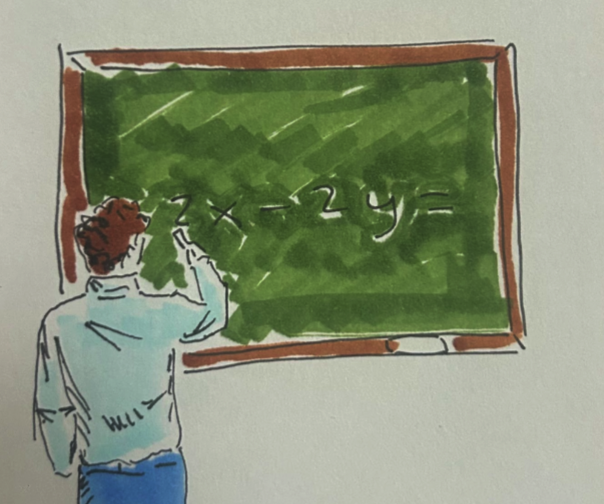
Middle School Science Teacher Susan Bartow in an effort to gain a firsthand understanding of what the shift was truly like. Her in-depth response underscores both her passion for the environment and her commitment to sustainability. Bartow recalled that the last new chalkboard was installed at Poly in 2001. When asked about it, she explained, “It had a dark green, very smooth, slightly shiny writing surface, and a light natural wood frame, all the way around.” She described how the chalkboard’s authenticity and aesthetic made teaching more engaging and enjoyable. Beyond its appearance, Bartow emphasized the environmental advantages of chalkboards. She noted, “I loved that there were no fumes. I loved that I did not have markers that wore out quickly and came wrapped in hard plastic.” In contrast, Bartow also admitted that teaching with whiteboards can be more efficient and effective for students and herself in some cases. What may initially appear to be a minor classroom change also reveals a much broader issue surrounding environmental sustainability. Poly is fortunate to have faculty members like Bartow who are mindful of the environmental consequences of classroom materials. Schools across the United States have chosen to switch to whiteboards because of both the variety of colors and cleanliness they appear to offer; however, I believe that this shift should be reconsidered. The long-term harms of whiteboards are irreversible and contribute to the air quality that students are exposed to on a daily basis.
Beginning with small changes, such as transitioning our lower school classrooms back to chalkboards, is a practical step this community can take to promote sustainable development. Too often, we fail to recognize that some of the greatest contributors to our health and the environment are the everyday materials that surround us. Seemingly innocuous changes for our convenience can have real harm on our planet and health. Chalkboards are not outdated; they are sustainable solutions hiding in the past. Choosing them signals a willingness to rethink habits and make sacrifices for the future. Saving the planet does not begin with grand gestures, but it does begin with closing the cap of the marker after you use it and erasing the choices that brought us here.