Shayla Starr
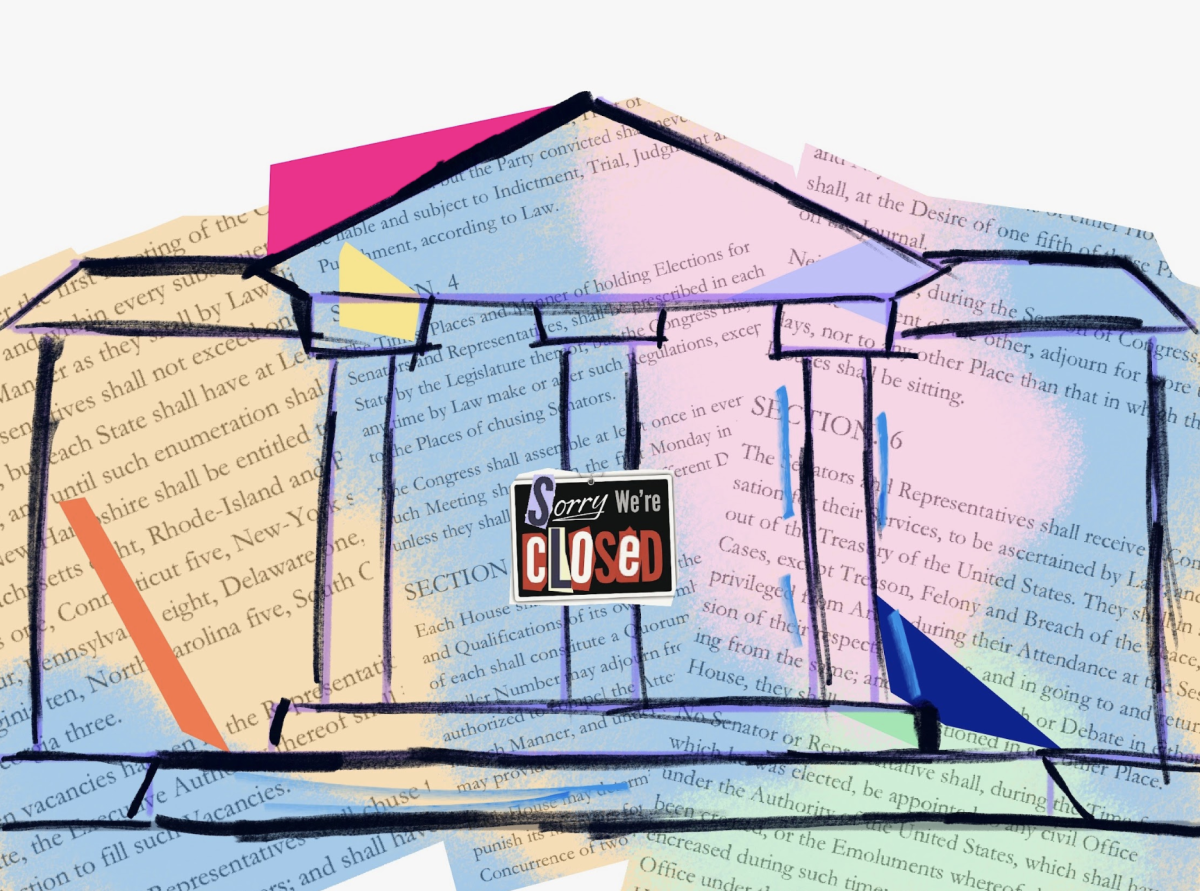
From Oct. 1 to Nov. 13, the United States government experienced the longest-ever shutdown, lasting 43 days. The Senate was split on spending legislation until Monday, Nov. 10, when a stopgap spending bill moved to the House. Finally, the shutdown ended after both the House and President Trump approved the bill on Wednesday, Nov. 12. Minority Senate Democrats had pushed for healthcare subsidies for Americans under the Affordable Care Act to be in the annual spending bill, but Republicans had staunchly opposed the move. Eventually, eight Democrats reached a deal with Republican leaders to vote in favor of the bill without healthcare subsidies in return for a vote in January to extend those subsidies.
A shutdown begins when Congress fails to pass a spending appropriations bill, which allocates a budget to each agency and program within the government. The shutdown ends when the majority of the Senate and House votes in favor of a spending bill and the president signs the bill.
During this shutdown, Americans in the Supplemental Nutrition Assistance Program (SNAP) experienced confusion and delays, and federal workers were furloughed (unpaid but guaranteed backpay). With nearly one in eight Americans receiving SNAP benefits, roughly 42 million Americans were left in limbo by the funding lapse.
Although on the surface, a disagreement on political issues caused the shutdown, Upper School History Teacher Alex Melonas saw a deeper reason: that Senate Democrats believed the Trump Administration would allocate government funds as it saw fit, with minimal consideration to the spending bill Congress passes.
“The Democrats are saying simply, ‘What is the point?’ We could sit down across the table, come to an agreement. We could pass a budget, or we could pass a continuing resolution to reopen the government, but what’s the point when the executive branch literally will just spend the money however it wants to, anyways?” Melonas explained. “I think the bottom line is ideological, which is about the role of the executive branch.”
Sophomore Abe Coher, Director of Communication of the Community Forum Club, said he’s seen little understanding of the shutdown among the Poly community. “You always have to be mindful of what’s going on in the political space because if you don’t, then you’re going to allow for authoritarian leaders and government corruption.”
Freshman Max Brooks commented, “I think government shutdowns are dangerous, and they need to be prevented because this nation runs not only on the backs of minimum wage workers, which it does, but also on the backs of government workers who, if they don’t get paid, can’t feed their families and won’t work as hard and might just quit entirely and find new jobs.”
Upper School History Teacher Avi McClelland-Cohen’s Government and Politics class predicted a shutdown soon before its actual onset, identifying the mounting tension between the two parties.
“The Democrats are trying to uphold this idea that has been key in US government since the New Deal […] that the government is here to support the people and to do at least some resource allocation so that the poorest people have a baseline of subsistence,” noted McClelland- Cohen. “Trump is the culmination of a decades-long effort by the right wing to undo the social safety net that was created in the 1930s. […] Ultimately, government should be accountable to all of us, but that only works if we’re all actually holding government accountable.”